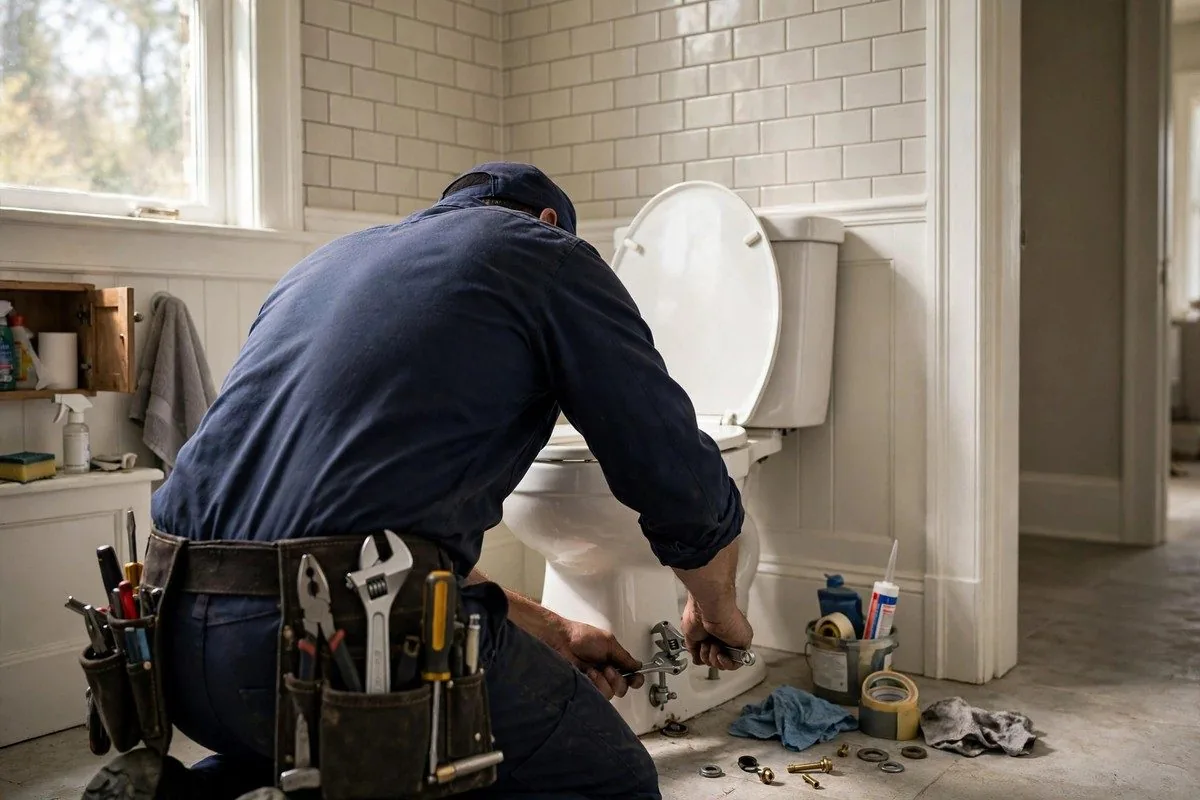
First, stop the overflow
If the water in the bowl is climbing, do not flush again. Take the lid off the tank and push the flapper down to stop the refill, or close the shutoff valve on the wall behind the toilet by turning it clockwise. This keeps the tank from sending more water into a bowl that cannot drain.
Put towels on the floor and lay out a plunger, rubber gloves and a bucket. Most clogs are small, and the situation looks worse than it is. A calm five minutes beats a panicked second flush every time.
Use the right plunger the right way
Toilets need a flange plunger, which has a rubber flap that folds out of the cup. A flat sink plunger does not seal in the bowl. Make sure there is enough water to cover the cup, since a plunger works with water, not air.
Seat the plunger over the drain hole and push down slowly the first time to push out trapped air. Then plunge with firm, steady strokes for about 15 to 20 seconds. When the water drops quickly, the clog has moved. Pour in a bucket of warm water to confirm the bowl drains freely.
Seal
Cover the drain with the flange cup under water.
Push slowly
The first push forces air out so the cup does not spray.
Plunge
Use firm strokes for 15 to 20 seconds, then check.
Test
Pour in warm water, not a flush, to see if it drains.
If the plunger does not work
Try a closet auger, a short toilet snake with a curved guard that protects the porcelain. Feed it in until you feel resistance, crank the handle to engage the clog, then pull back. This catches wads of paper and soft items the plunger cannot move.
Hot dish soap helps with a paper clog. Squirt in a good amount, add a gallon of hot but not boiling water and wait twenty minutes. Boiling water can crack the bowl, so keep it merely hot.
What not to do
Chemical openers are the biggest trap. They sit in a bowl that cannot drain, and if the clog does not move, the next person to work on it, you or the plumber, is handling caustic water. Most plumbers will tell you to skip them completely.
Common mistakes
- Flushing again to see if it clears
- Pouring in chemical drain opener
- Using boiling water on the porcelain
- Forcing a wire hanger down the drain
Better habits
- Stop the tank refill, then plunge
- Use a closet auger for deeper clogs
- Use hot tap water with dish soap
- Call a plumber when the tools run out
What actually clogs toilets
Too much toilet paper is the most common cause, followed by wipes, cotton products and items dropped in by children. Wipes marketed as flushable do not break down the way paper does, and they wrap around each other in the line to form a mass.
Low-flow toilets also clog more easily when overloaded, because they use less water to push waste along. If one toilet clogs often, the cause may be the toilet itself, a partial blockage past the bowl, or a vent problem that slows the flow.
Sandwich details: septic and the aquifer
Many Cape homes rely on a septic system, so what goes down the toilet matters beyond the bowl. The state septic code, Title 5 at 310 CMR 15.000, requires inspection under certain circumstances. Ask the Sandwich Health Department whether your street has sewer or a Title 5 septic system, because wipes and chemicals affect a tank differently than a municipal sewer.
The Cape Cod aquifer is an EPA-designated Sole Source Aquifer that supplies all of the Cape's drinking water, according to the Cape Cod Commission. That is a good reason to keep drain chemicals out of your plumbing entirely.
If the clog is deeper than the toilet, our team covers Bourne and Barnstable as well as Sandwich, and the same steps apply there.
Source: Cape Cod Commission and Town of Sandwich Health Department
Water still rising?
If the bowl will not drain and the plunger has failed, the line may be blocked further down. Call and describe what you see.
Signs it is more than a bowl clog
A single toilet that clogs once is usually a bowl problem. Other signs point deeper.
- Water backing up in a shower or tub when you flush
- Gurgling from other drains when the toilet runs
- More than one toilet clogging in a short period
- Sewage smell in the basement or around floor drains
Those symptoms suggest the main line is partly blocked, and plunging will not reach it. A drain cleaning visit with a camera finds the cause. Waiting turns a small blockage into a backup that can reach the floor.
A quick checklist for a stubborn bowl
When a clog fights back, slow down and work through a short list. Each step is cheap and none of them risks the porcelain or the pipe. If you reach the end and the water still sits high, you have learned something useful for the plumber, who will ask what you already tried.
Check that the water level is steady and not creeping upward. Look for a second fixture that gurgles when you plunge, which hints at a vent or line problem. Note whether the toilet clogged right after a heavy use or slowly over days, since a slow decline points to buildup and a sudden one points to an object.
- Plunge with a flange plunger and steady strokes
- Use a closet auger if the plunger only moves the water
- Try hot tap water with dish soap and wait twenty minutes
- Check other drains for gurgling or backup
- Stop and call if water keeps rising or smells like sewage
Preventing the next one
Keep a plunger and a closet auger in the bathroom. Put a small trash can with a lid next to the toilet and tell guests it is for wipes and feminine products. Teach kids that toys and extra paper do not go down.
If a toilet seems weak even when nothing is stuck, check the water level in the tank and the fill valve. A weak flush starts clogs. A plumber can adjust or replace the parts in a short visit.
Frequently asked questions
Use a closet auger, which is made for toilets and protects the porcelain. A regular cable can scratch the bowl.
It is not recommended. The chemicals sit in standing water and can burn skin, and they can harm a septic system.
Often it is a low-flow bowl overloaded with paper, a worn fill valve, or a partial blockage in the line. A plumber can check each.
Close the shutoff valve behind the toilet, lift and hold the flapper so the tank stops refilling, and call if you cannot stop the flow.
Yes. They do not break down like paper and are a leading cause of line blockages, especially on septic systems.
Ask the Sandwich Health Department. The town pages do not state sewer availability, so a call to the department settles it.
Still have a question about your situation? The line is open around the clock.
Call (508) 389-4045Reference: toilet replacement and flange work follow the Uniform State Plumbing Code (248 CMR 10.00). Check a plumber's license through the Board of State Examiners of Plumbers and Gas Fitters.