A Backed-Up Drain Is Urgent When Water Has Nowhere To Go
If water is rising in a sink, bubbling up in a tub when you flush, or leaking from a basement floor drain, call now. A blockage that has reached the main line will not clear on its own, and every flush or load of laundry adds more water to the problem.
Drain cleaning in Sandwich covers everything from a single slow kitchen sink to a full main line stoppage. The first job on the phone is working out which kind of clog you have, because a clog in one fixture and a clog in the main line need different tools and a different price.
- Stop running water in the house until we have talked it through.
- Do not pour chemical drain openers into a standing blockage. They sit in the pipe and burn skin and gaskets when a plumber opens the line.
- Move rugs, boxes and stored items away from basement floor drains.
- Note which fixtures are affected. That tells us how far down the line the clog sits.
Emergency Drain Cleaning: What To Do Right Now
These steps take a few minutes and make the visit faster. None of them require tools.
Stop adding water
Hold off on showers, dishwasher cycles and laundry. Every gallon that goes down a blocked line has to come back up somewhere.
Check the pattern
One slow fixture points to a branch line. Several fixtures at once, especially on the lowest floor, point to the main line.
Locate the cleanout
Many homes have a capped cleanout pipe near the foundation or in the basement. Knowing where it is saves time when we arrive.
Call the line
Describe what you see and hear. We tell you plainly whether it can wait for a same-day appointment or needs a plumber now.
Where Drain Clogs Actually Start
Most clogs form in the same few places. A kitchen sink clogs where grease cools and clings to the first bend under the cabinet. A bathroom sink clogs in the trap, where hair and soap film build into a mat. A tub or shower clogs just past the strainer, where hair wraps around the crossbar.
A main line clog is different. It sits beyond every branch, so it shows up as slow drains everywhere or as water backing up at the lowest opening in the house. Common causes are tree roots finding a joint, paper and wipes that snag on a rough spot, and years of scale narrowing the pipe.
| Symptom | Likely location | Usual fix |
|---|---|---|
| One sink drains slowly | Trap or branch line under that sink | Clear the trap, run a small cable |
| Tub gurgles when the sink runs | Shared branch line | Cable the branch and check the vent |
| Toilet bubbles when the washer drains | Main line or vent | Cable the main from the cleanout |
| Water at the basement floor drain | Main line stoppage | Machine the main and run a camera |
| Sewage smell with slow drains | Main line or dry trap | Camera inspection, then clear the line |
How We Clear A Drain
The method depends on what the clog is made of and how far into the system it sits. We start with the least invasive tool that will work, then step up only if the line needs it.
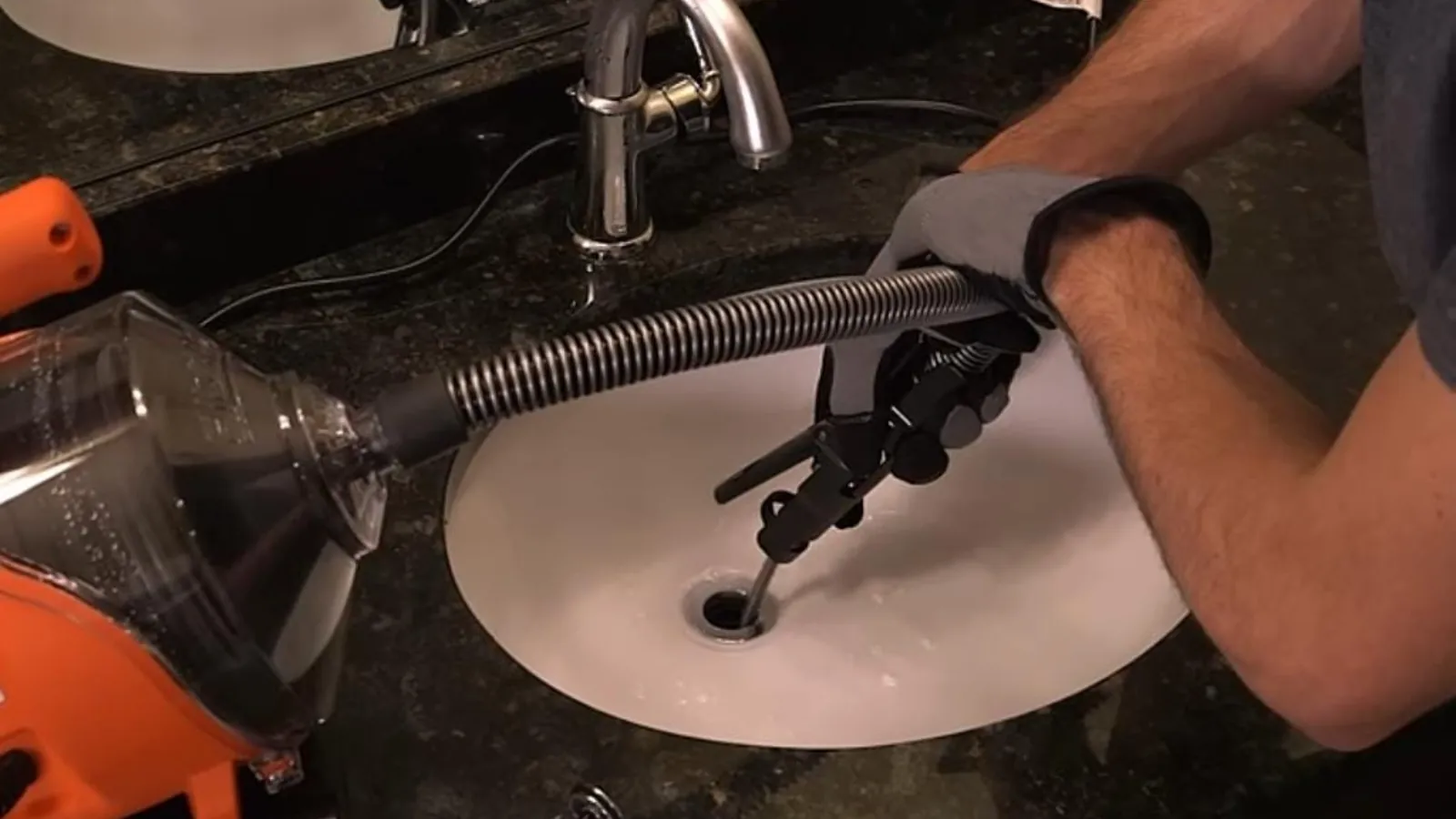
For sinks and tubs we usually begin by pulling the trap and checking for a simple blockage. If the trap is clear, a small drum cable goes down the branch line to break up the obstruction and pull it back out. Kitchen lines often need a cutting head because grease hardens into a ring that a plain cable simply pokes through.
Main line machines
A main line stoppage calls for a larger electric cable machine run through the cleanout. Heavier cutting heads open the pipe to its full diameter instead of just punching a hole through the clog. When a line keeps clogging after a basic clearing, hydro jetting scours the pipe wall with high-pressure water.
Camera follow-up
After a main line job, a camera run shows whether the pipe is actually clear and whether something else is going on, such as a cracked joint or a belly where water pools. If the camera finds damage, we explain what it shows and whether sewer line repair makes sense.
Cable Machine Or Jetting: Picking The Right Method
We tell you which method fits your line before work starts, and the price is clear before we begin.
Cable machine
- Best for a first-time stoppage in a sink, tub or main line
- Cuts through roots and soft blockages quickly
- Lower cost for a simple clog
- May leave a film on the pipe wall that lets the clog return
Hydro jetting
- Best for grease, scale and repeat clogs
- Cleans the whole pipe wall, not just a channel
- Useful after roots have been cut out
- Not suited to fragile or badly cracked pipe
What Drives The Price Of Drain Cleaning
What changes the cost of a drain job
Drain work is priced by the job, and the price depends on what is in the pipe and how hard it is to reach. You get a clear number before we start.
Which line is blocked
A single fixture trap is a small job. A main line stoppage needs bigger equipment and more time.
Access to the line
A reachable cleanout makes the job faster. If we have to pull a toilet to get in, that adds labor.
What is causing the clog
Soft buildup clears quickly. Roots and hardened grease take heavier tools and sometimes a second method.
Camera inspection
A camera run after the job adds to the price but shows whether the clog is likely to return.
Time of the call
Nights, weekends and holidays are emergency visits and are priced that way. You hear the number first.
A note on insurance
Water damage from a sewage backup is sometimes covered by homeowners policies, and drain backup coverage is often a separate add-on. Check with your insurer before you throw anything away, and take photos of the affected area.
Drain Cleaning In Sandwich Homes
Sandwich is a town of mostly owner-occupied homes, about 89 percent according to the Census Bureau, and many of them are older Cape-style houses with drain lines that have seen decades of use. Older cast iron and clay lines roughen with age, which gives paper and grease more to catch on.
Whether your street connects to a municipal sewer or uses a Title 5 septic system changes what a clog means. A stoppage in a septic home can point at the house line, the septic tank outlet or the leaching field. Ask the Sandwich Health Department whether your street has sewer or a Title 5 system, and tell us which you have when you call.
Source: U.S. Census Bureau QuickFacts for Sandwich town. Septic rules are in Title 5, 310 CMR 15.000.
Keeping Drains Clear After We Leave
A few habits keep a cleared drain clear. Wipe greasy pans with a paper towel before washing, and put cooking fat in a can instead of down the sink. Use a hair catcher in every tub and shower. Flush only toilet paper, because wipes labeled flushable still tangle in older lines.
If the same drain clogs more than a couple of times a year, the clog is probably not the real problem. A belly in the pipe, a root intrusion or a failing joint keeps catching debris. That is the point where a camera inspection saves money compared with repeated clearing.
Other Plumbing Problems That Look Like A Clog
Not every slow drain is a clog. A blocked vent stack makes drains gurgle and drain slowly because air cannot enter the system behind the water. A broken or sagging section of pipe holds water in a low spot and clogs again within days. A failing septic tank can back up into the house and look exactly like a main line clog.
If a kitchen sink backs up into the dishwasher, the disposal may be the culprit, and garbage disposal repair may be the fix. If a toilet will not flush but nothing else is slow, see our toilet repair service.
Frequently asked questions
It is when water is backing up into the house, coming out of a floor drain, or affecting several fixtures at once. A single slow sink can usually wait for a same-day appointment, but call and we will tell you which category you are in.
If more than one fixture is slow, or if water shows up at the lowest drain in the house when you run water upstairs, the clog is probably in the main line. A single slow fixture is usually a branch line or trap.
Please do not. Chemical openers rarely clear a real blockage, they sit in standing water and can burn skin when a plumber opens the pipe, and they are rough on older pipe and gaskets.
Cable machines and jetting are safe on sound pipe. If a camera shows a cracked or collapsed section, we tell you before using heavy methods and explain the options.
Repeat clogs usually mean something in the pipe keeps catching debris. A belly, roots or a rough joint are the usual culprits. A camera inspection shows which.
Yes. Restaurants, shops and rentals around Sandwich call us for grease line and floor drain clogs. See commercial plumbing for more.
Routine clearing normally does not. If a repair involves replacing pipe, ask the Sandwich Building Department about permits, because plumbing permits are issued only to licensed plumbers.
We can check whether the clog is in the house line or past the tank. Septic tank pumping and leaching field work fall under Title 5, and we will point you to the right approved provider if that is the cause.
Still have a question about your situation? The line is open around the clock.
Call (508) 389-4045Standards note: drain and vent work in Massachusetts is governed by the Uniform State Plumbing Code, 248 CMR 10.00. Licensing is set by 248 CMR 3.00 and overseen by the Board of State Examiners of Plumbers and Gas Fitters.