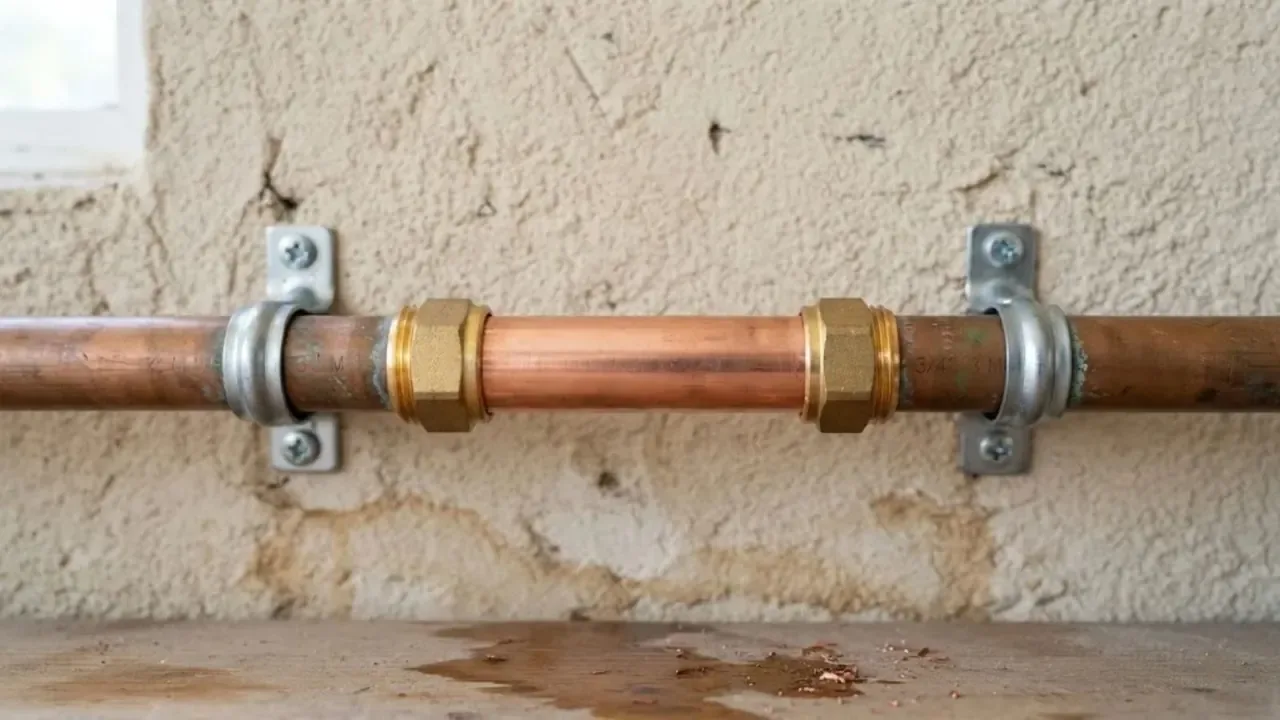
Burst Pipe Emergency: Shut Off The Water First
If a pipe has burst, find the main shutoff valve and close it now. A split pipe can release hundreds of gallons in an hour, and every minute of running water soaks insulation, drywall and flooring. Shutting off the water is the single most useful thing you can do before anyone arrives.
Then call. We stay on the line while you find the shutoff if you need help, and we tell you what to do about electricity and standing water. Getting the water off and getting a plumber moving are the two things that cap the damage.
What To Do In The First Ten Minutes
Close the main valve
It is usually near where the water line enters the house, often in the basement or a utility area. Turn it clockwise until it stops.
Open a faucet low in the house
This drains the pressure and the remaining water out of the system, which slows the leak.
Cut power in wet areas
If water is near outlets, appliances or the electrical panel, switch off power at the panel only if you can reach it from a dry spot. Otherwise call the utility or 911.
Contain and photograph
Move valuables, put out buckets and towels and take photos of the damage for your insurer before cleanup.
Call the line
Tell us where the water is coming from and whether it has stopped. We plan the repair and tell you what to expect.
Why Pipes Burst
Freezing is the best-known cause. Water expands as it turns to ice, and the pressure builds between the ice blockage and the closed faucet until the pipe splits. The split is often not where the ice formed, and it usually shows only after the ice thaws and water begins to flow.
Freezing is not the only cause. Old galvanized pipe corrodes from the inside and thins until it fails. Copper pipe can develop pinholes. High water pressure puts stress on fittings and joints. Poor installation, bad solder joints and shifting soil all contribute.
| Cause | How it fails | Where we see it |
|---|---|---|
| Freezing | Ice expands and splits the pipe wall | Exterior walls, crawl spaces, garages, unheated basements |
| Corrosion | Pipe wall thins and pinholes open | Older galvanized and copper lines |
| Pressure spikes | Joints and fittings fail | Homes with high or fluctuating pressure |
| Ground movement | Buried or slab lines crack | Service lines and under-slab piping |
| Poor workmanship | Joints separate under load | Old repairs and DIY connections |
Frozen Pipes: What To Do And What To Avoid
If a pipe is frozen but has not burst, you have a small window to avoid a much bigger problem.
Do
- Keep the faucet open so water can flow as the ice melts
- Warm the pipe gently with a hair dryer or warm towels
- Open cabinet doors under sinks on exterior walls
- Call a plumber if you cannot find or reach the frozen section
Avoid
- Using an open flame or torch on any pipe
- Leaving a frozen line shut off and ignoring it
- Assuming it is fine once water starts to trickle
- Turning the heat up and hoping the pipe thaws safely on its own
How We Repair A Burst Pipe
Once the water is off and the area is safe, we find the split and decide the best repair. A short split in good copper can often be cut out and replaced with a new section. If the pipe is old and brittle, a longer section or a full run may be the better choice.
Copper repairs
We cut out the damaged section and join new copper with soldered or press fittings. Press fittings let us work without an open flame in tight spaces.
PEX repairs
PEX tolerates some freezing better than rigid pipe, and a split section is replaced with crimped or expansion fittings.
Galvanized pipe
Old galvanized lines are often corroded throughout, so a spot repair may fail again nearby. We explain when repiping is the smarter choice.
Fittings and valves
When a joint or valve has failed, we replace the part and check the connections on either side.
Pressure check
After the repair we restore water slowly and watch for leaks and pressure issues.
Preventing The Next Freeze
A burst pipe in winter is preventable more often than not. Insulate pipes in crawl spaces, garages and outside walls. Seal air leaks around where pipes enter the house. Disconnect outdoor hoses and shut off exterior spigots before the first hard freeze.
When a hard freeze is forecast, leave a slow drip running on faucets that sit on exterior walls and keep cabinet doors under sinks open. If you will be away, keep the heat on and set to a safe temperature rather than turning it off.
What Drives The Price Of Burst Pipe Repair
What changes the price of a burst pipe repair
Burst pipe work is priced by the damage and the access. You get a clear price once we see the break and before we start the repair.
Pipe material
Copper, PEX and galvanized each take different parts and methods.
Length of the damage
A single split is a short repair. A run that froze in several places is longer.
Access to the pipe
A pipe in an open basement ceiling is quick to reach. One inside a finished wall needs an opening and closing.
Fittings and valves
Replacement of corroded valves adds to the parts and labor.
Time of the call
Emergency visits in the evening, overnight and on holidays are priced as emergency visits.
A note on insurance
Homeowners policies often cover sudden burst pipe damage, though coverage rules vary. Call your insurer promptly, and keep photos and your paperwork. We can describe what we found and repaired for your claim.
After The Repair: Drying Out
Fixing the pipe stops the water. Drying the structure prevents the second problem, which is mold. Wet drywall, insulation and carpet should be dried quickly. Wet materials that cannot dry may need removing.
We repair the plumbing. Water extraction, drying and rebuilding are usually handled by a restoration company, and your insurer can recommend one. We keep the pipe repair documented so your claim is straightforward.
Burst Pipes In Sandwich Homes
Sandwich is one of the oldest towns on Cape Cod, founded in 1637, and many of its houses are older than modern plumbing standards. Older homes often have pipes in exterior walls, unheated crawl spaces and uninsulated corners where a hard freeze finds them first. A good number of homes are also seasonal or have been left empty over a winter, which makes a burst pipe more likely to run unnoticed.
The Sandwich Water District keeps staff on call around the clock for problems on the utility side of the meter, such as a break in the street main. A break inside your home is yours to shut off, and that is what the main valve is for. Know where it is before you need it.
In Massachusetts, plumbing permits are issued only to licensed plumbers. If your repair involves replacing sections of pipe, ask the Sandwich Building Department about permits and inspections.
Sources: Cape Cod Chamber of Commerce history of Sandwich, Sandwich Water District, Town of Sandwich Building Department.
Frequently asked questions
Close the main shutoff valve right away, then open a faucet on the lowest level to drain the system, and call us. Do not wait to see if it stops.
It is usually where the water line enters the house, often in the basement, a utility room or a crawl space. Find it now, before an emergency, and make sure the handle turns.
If water is near outlets, appliances or the panel, shut off power only if you can reach the panel from a dry spot. Otherwise stay out and call the utility or 911.
Gentle heat from a hair dryer or warm towels is safe. Never use an open flame. If you cannot find the frozen section, call a plumber.
Many policies cover sudden burst pipe damage, though terms vary. Photograph everything and contact your insurer promptly.
We repair the plumbing and document the break. Drying and rebuilding are handled by a restoration company, and we can point you in the right direction.
A burst pipe releases a large volume of water fast. A leak is slower and may be hidden. For slow or hidden leaks, see leak detection.
Ask the Sandwich Building Department. In Massachusetts, plumbing permits are issued only to licensed plumbers.
Still have a question about your situation? The line is open around the clock.
Call (508) 389-4045Standards note: pipe repairs in Massachusetts follow the Uniform State Plumbing Code, 248 CMR 10.00, and only licensed plumbers can pull plumbing permits. The Board of State Examiners of Plumbers and Gas Fitters handles license questions.