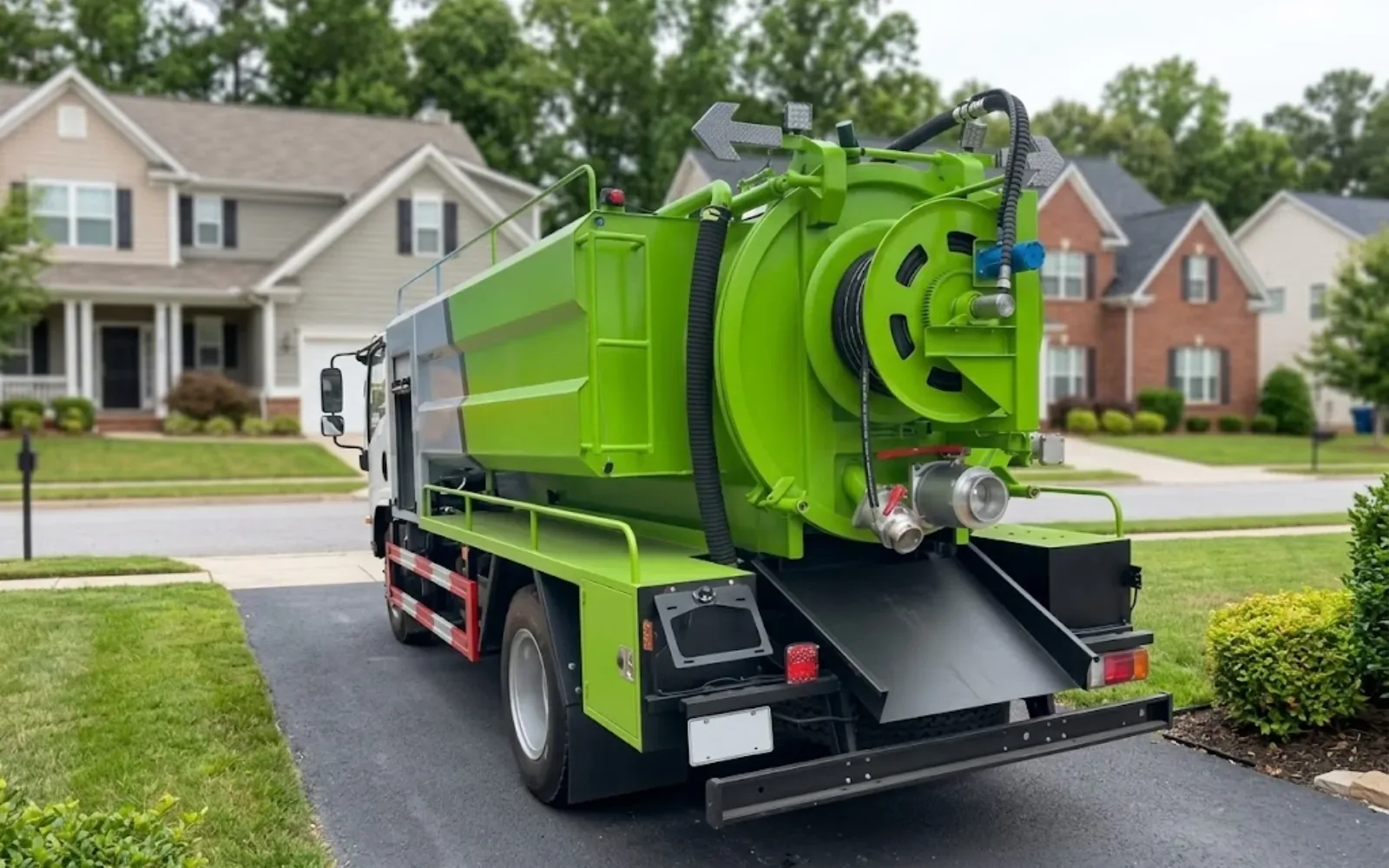
When Hydro Jetting Is The Right Emergency Call
If wastewater is rising in a tub, floor drain or toilet and a drain snake only bought you a few weeks, call now. Repeat blockages usually mean the pipe wall is coated, not that a single wad of paper is stuck. A cable punches a hole through the middle of the buildup and leaves the rest clinging to the pipe.
Hydro jetting uses a hose fitted with a nozzle that fires water backward and sideways at high pressure. The jets cut grease, soap scum and fine roots off the pipe wall, then flush the debris down and out. The goal is a pipe that is actually clean, not one with a pinhole through the sludge.
Stop using water first
Running a washer or taking a shower while a main line is backing up pushes more water into a pipe that has nowhere to send it. Hold off on laundry and dishes until the line is cleared. If sewage is reaching a basement floor, keep people and pets away from it and call right away.
How Jetting Differs From Snaking
Both methods have a place, and a good plumber chooses based on what the line is telling them. A cable machine is fast and effective for a fresh stoppage near a fixture. Jetting is the better tool when the blockage keeps returning or the line has years of buildup in it.
| Question | Cable snaking | Hydro jetting |
|---|---|---|
| What it does | Bores a hole through the blockage | Scours the pipe wall along its length |
| Best for | A fresh, single clog near a fixture | Grease, scale, soap buildup and fine roots |
| Repeat clogs | Often return as buildup regrows | Removes the buildup that feeds the next clog |
| Pipe condition | Gentler on fragile pipe | Needs a camera look first to confirm the pipe can take it |
| Typical use | Sinks, tubs, short runs | Main lines, kitchen lines, long horizontal runs |
Our Jetting Process From Call To Clean Line
We do not run a jetter into a pipe blind. A pipe that has collapsed or separated can be damaged by high pressure, so the line is checked first and the method is chosen from what the camera shows.
Locate the cleanout
We find the access point, usually a cleanout near the foundation or in the basement, so the hose enters the line cleanly.
Camera the line
A small camera shows the buildup, root intrusion and the pipe material before any pressure is applied.
Jet the length
The nozzle works from the cleanout toward the street or tank, then is pulled back to rinse the wall.
Verify on video
We run the camera again so you can see the pipe wall afterward, and we note any damage the cleaning revealed.
Signs Your Line Needs Jetting Instead Of Another Snake
Most homeowners do not call about the buildup. They call about what it does. These are the patterns that point toward jetting.
- The same drain slows down again within weeks or months of being cleared.
- A kitchen line gurgles after the dishwasher runs, a sign of grease narrowing the pipe.
- More than one fixture drains slowly at the same time.
- Toilets bubble when the washing machine empties.
- A previous camera inspection showed roots or scale along the wall.
What Jetting Will Not Fix
Jetting cleans a pipe. It does not repair one. If the camera shows a cracked section, a belly that holds water or a joint that has pulled apart, cleaning only buys time. In that case we show you the footage and talk through the options, which may include sewer line repair on the damaged section.
It also is not a septic tank service. Jetting addresses the house sewer line between your fixtures and the street or the tank. Pumping and inspecting a septic tank is a separate job.
Sandwich Notes: Sewer Or Septic On Your Street?
Before booking any line work in Sandwich, it helps to know whether your home connects to a municipal sewer or a Title 5 septic system. The Town of Sandwich Health Department keeps a Water and Wastewater section, and the Health Department is the place to ask whether your street has sewer or a septic system.
That answer changes what we clear. On a septic property the line runs to a tank and field, and we are careful about where the flushed debris ends up. Tell the dispatcher what you know and we will plan around it.
Source: Town of Sandwich Health Department, Water and Wastewater section. Title 5 is 310 CMR 15.000.
Keeping The Line Clean After We Leave
A freshly jetted line stays clear longer when the habits feeding it change. Cooking grease belongs in a can in the trash, not down the sink. Wipes labeled flushable do not break down like paper. Hair catchers in showers cost very little and catch what jetting later has to remove.
What feeds buildup
- Pouring warm grease down the kitchen sink
- Flushing wipes and paper towels
- Coffee grounds in the disposal
- Skipping the shower hair catcher
What keeps a line clear
- Wiping pans before washing
- Flushing only waste and toilet paper
- Compost or trash for grounds
- A drain screen in every tub and shower
What Drives The Price Of A Jetting Visit
What drives the price
Jetting is quoted after we know the line. You get a clear price before work starts, and the number depends on the details below.
Line length and access
A short run from a basement cleanout is quicker than a long run from a distant access point.
Buildup severity
Heavy grease or dense roots take more passes than light scale.
Camera footage
A before and after camera run adds time but gives you proof of the result.
Pipe condition
Fragile or damaged pipe may call for a gentler method or a repair first.
After hours
Nights, weekends and holidays are quoted the same way, with the price stated up front.
A note on insurance
If a backup has damaged floors or belongings, your homeowner policy may respond to the cleanup. Read your policy or ask your agent, and keep photos before anything is moved.
Frequently asked questions
Stop running water in the house, since every flush and rinse sends more into the blocked line. Move rugs and valuables away from the lowest drain. Do not pour chemical cleaners into a standing backup because they can splash and they make the pipe unsafe to work on. Call the line and tell us which fixtures are affected.
It depends on the pipe, which is why we run a camera first. Sound cast iron, clay and plastic generally handle it well. Pipe that is cracked, separated or thin can be damaged. We will tell you honestly if jetting is the wrong tool.
Most visits fit into a few hours depending on line length and access. Heavy buildup takes extra passes. We explain the plan before we start so you know what to expect.
It removes the buildup that causes most repeat clogs, but habits matter. Grease, wipes and roots can return. If roots are the cause, the camera will show where they enter, and a repair may be the lasting answer.
Yes. Kitchen lines carry grease, and grease hardens on cool pipe walls. Jetting is one of the better ways to cut it back to bare pipe.
We jet the house line that feeds the septic tank. Pumping or inspecting the tank itself is a different service. Ask the Sandwich Health Department about Title 5 requirements for your property.
Yes. The line is open around the clock and a licensed plumber answers. You hear the price before work starts.
Still have a question about your situation? The line is open around the clock.
Call (508) 389-4045Standards note: jetting itself is maintenance, but any pipe repair that follows is regulated work under 248 CMR 10.00. Septic systems fall under the separate Title 5 guidelines, 310 CMR 15.000.