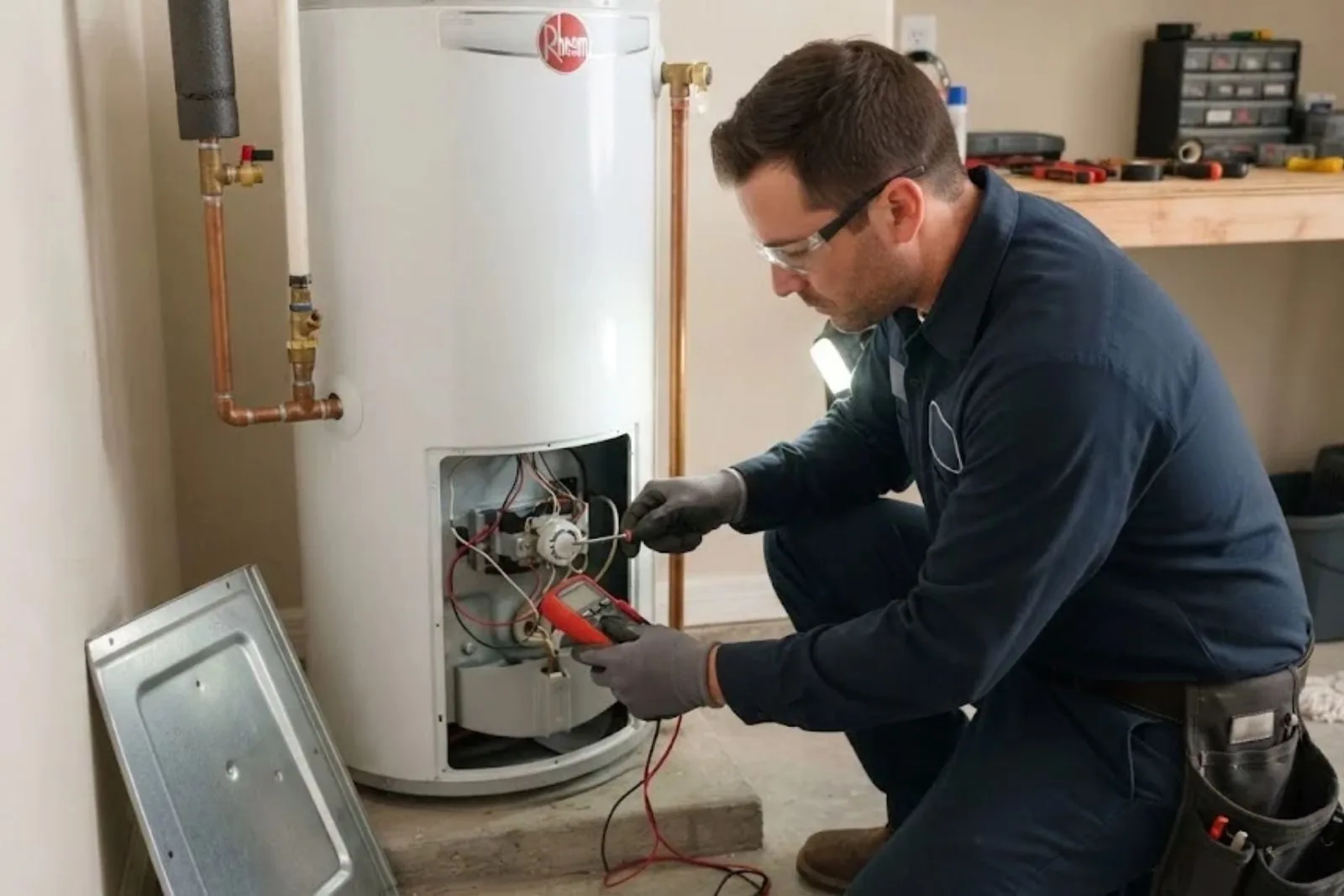
What an anode rod actually does
Inside a steel tank water heater hangs a long metal rod, usually magnesium or aluminum, screwed into the top of the tank. Its job is to corrode on purpose. Water attacks metal, and the rod is the more reactive metal, so it gives itself up first and protects the steel tank wall.
That is why it is called a sacrificial anode. Once the rod is eaten away, the corrosion moves to the tank itself. A steel tank with no protection can start to rust through, and a rusted-through tank cannot be repaired.
So the rod is a countdown clock. Replace it before it is gone, and the tank can keep going. Ignore it, and the tank is the next thing to fail.
Signs the rod may be used up
You cannot see the rod from the outside, but the water and the heater give hints. A rod that has failed can leave the tank open to corrosion, and several symptoms can show up together.
None of these signs prove the rod is the cause, since sediment and bacteria produce similar symptoms. They are reasons to look, not reasons to panic.
- Rusty or brown hot water, while cold water runs clear.
- A rotten egg smell from the hot side only.
- Popping or rumbling noises as sediment cooks at the bottom of the tank.
- Small drips or dampness near the tank base or fittings.
- A heater that is more than six or seven years old and has never been serviced.
Magnesium, aluminum and powered rods
Three main types exist. Magnesium rods protect best and are the common factory choice. They can create more smell in some water, because certain bacteria feed on the byproducts and produce sulfur gas.
Aluminum rods last well and often cause less smell, but they leave aluminum compounds in the tank. Some people avoid them for that reason, so check the heater manufacturer's guidance before choosing.
Powered anodes use a small electric current instead of a rod that wears away. They cost more up front but do not get consumed, and they are sometimes the answer when an odor problem keeps returning. Your plumber can explain what fits your tank.
| Rod type | Strength | Watch for |
|---|---|---|
| Magnesium | Strong protection for the tank | Can feed odor-causing bacteria in some water |
| Aluminum | Long life, often less odor | Leaves aluminum residue and may not suit every tank |
| Powered anode | Does not wear away | Higher cost and needs a power connection |
How to check a rod safely
Checking a rod is a job some handy homeowners do, but it carries real risk. You are working with a pressurized tank, hot water and, on gas models, a flame and a vent. If any step feels uncertain, stop and call a plumber.
The steps below describe the usual process. Always follow the instructions printed on your own heater first.
Turn off the fuel
Switch off the electric breaker or set the gas control to pilot or off.
Close the cold supply
Shut the cold water valve above the tank and open a hot tap to relieve pressure.
Drain a few gallons
Open the drain valve and lower the level enough to work at the top without spilling.
Loosen the rod
Use a six-sided socket and a long breaker bar, since factory rods are often tight.
Inspect the rod
A rod thinner than your thumb or with bare steel showing along the core needs replacing.
The stuck rod problem
Many factory rods have never been loosened. They can be seized into the tank fitting after years of heat and mineral buildup. Forcing one with a cheater pipe can twist the fitting or crack the glass lining around it, which turns a cheap job into a tank replacement.
Clearance is another snag. The rod needs about as much empty space above the tank as its length, and many basements and closets do not have it. In that case, a flexible segmented rod can be installed in pieces.
These are the main reasons many homeowners hand the job to a plumber. A professional carries the right tools and knows when a rod is better left alone.
Not sure whether your tank is worth saving?
A plumber can look at age, leaks and the rod, then tell you plainly whether a repair or replacement makes more sense.
How often to replace it
There is no single schedule, because the rod wears at the speed of your water. Many manufacturers and installers suggest an inspection every few years, and a check once a year after the heater passes its fifth birthday is a reasonable habit.
If the rod is more than half gone, replace it. If it is down to a thin wire, replace it now. A fresh rod on a healthy tank is some of the best value in home maintenance, and it also keeps a warranty claim in better shape for tanks that require upkeep.
A heater that has gone ten or more years with no rod change may already be damaged inside. Replacing the rod then helps less, and it may be time to plan for a new unit, which our water heater replacement page explains.
What the water in Sandwich means for your tank
Sandwich homes on the municipal system get groundwater from wells that the Sandwich Water District operates. The district's 2025 water quality report says sodium hydroxide is added at the wells and booster station to control corrosion of household plumbing. That treatment is designed to be gentler on pipes and fixtures.
The same report does not list a hardness figure, so it is not possible to say from the report how quickly scale or rod wear will build in your tank. The practical answer is to test your own tap, read the district's annual report and look at the rod itself.
Homes on private wells have different water, and results can vary from one property to the next. The Cape Cod aquifer is the sole source of drinking water on the Cape, and the Cape Cod Commission explains how closely land use and water quality are tied. A plumber who checks rods across the Upper Cape sees that variety firsthand.
Sources: Sandwich Water District 2025 Water Quality Report and the Cape Cod Commission.
When replacing the rod is not enough
Some tanks are past saving. If you see water pooling under the heater, rust at the seams or a leak from the tank body, a new rod will not help. A leaking tank has to be replaced, and it is best to act before the leak turns into a flood.
If you are in that spot in Bourne, Sandwich or Barnstable, see our Bourne plumber page and Barnstable plumber page for the area we cover. A plumber can drain the tank, protect the floor and set up a replacement the same day when parts are on hand.
Frequently asked questions
You can, but the tank will corrode much faster. Without the rod, the steel wall becomes the sacrificial metal. A heater run this way often fails years earlier than one with a healthy rod.
Sulfur-reducing bacteria in the tank can produce hydrogen sulfide, especially with magnesium rods in warm water. Flushing the tank, raising the temperature briefly under supervision or switching rod type can help. A plumber can find the cause.
Often three to five years, but the range is wide. Water chemistry, temperature and usage all matter. Inspection is the only reliable answer for your own tank.
Generally no. Many manufacturers recommend inspection, and a failed rod can be a maintenance issue. Check your warranty card and keep a record of the work.
The district's 2025 report does not give a hardness number, so it cannot be answered from that report. Ask the Sandwich Water District or test your tap. Private well water can differ.
Yes, tankless units have no steel storage tank, so there is no rod. They do have a heat exchanger that needs descaling, so maintenance simply shifts to a different part.
Still have a question about your situation? The line is open around the clock.
Call (508) 389-4045Reference: according to manufacturer guidelines, anode rods should be checked periodically, and plumbing work generally follows 248 CMR 10.00.