What waterproof cement is
The product most people call waterproof cement is hydraulic cement. It is a fast-setting mix that hardens in minutes, even underwater, and expands slightly as it cures. That makes it good for plugging a crack or a hole where water is actively seeping in.
Separate from hydraulic cement are waterproofing paints and coatings. These are brushed or rolled across a whole wall and are meant for damp walls, not active leaks. Many are cement-based, others are acrylic or epoxy.
Both have a place. Neither one addresses where the water comes from, and that is the point most homeowners miss.
Where hydraulic cement works
Hydraulic cement does its best work on small, specific defects. A crack in a poured wall, a hole left by a pipe or a joint where the wall meets the floor can all be sealed when the water is seeping through a single spot.
The repair is strongest when the crack is stable. A crack that does not move, in a wall that is not shifting, will hold a patch for a long time.
It also helps as a first aid measure. If water is gushing through a gap, plugging it gives you a calm moment to look for the cause.
- Narrow, stable cracks in poured concrete.
- Holes around old pipe penetrations.
- Small gaps at the wall and floor joint.
- Spots where mortar has fallen out of a block wall.
Where it fails
Hydraulic cement fails when the crack moves. Foundations settle, freeze and flex, and a rigid patch can pop out as the wall shifts. Cracks that grow wider each year are a structural question, and a patch will not answer it.
It also fails against hydrostatic pressure. When the ground outside a wall is saturated, water pushes against the wall from outside. A patch on the inside may hold for a time, but the pressure will find the next weak point, and the water can show up a foot away.
Block walls make this worse. Water can travel through the hollow cores inside concrete block and appear far from where it entered.
Coatings are not a cure
A waterproof wall coating blocks moisture vapor and light seepage. It does not stop water pushing through under pressure, and a thick coating can blister and peel when water pools behind it.
Treat coatings as a finish for a dry basement that is slightly damp, not a repair for a wet one. If your wall sweats in summer, a dehumidifier may do more than paint.
A simple test helps. Tape a square of plastic sheeting to the wall for a day or two. If moisture collects on the wall side of the plastic, water is coming through the wall. If it collects on the room side, the humidity in the room is the cause.
Not sure where your basement water comes from?
Call and describe what you see. A plumber can check pipes, the sump and drainage before you spend money on patches.
Check the plumbing before the walls
Plumbing is a surprisingly common cause of a damp basement. A weeping supply pipe, a leaking drain, a failed water heater, a running toilet tank or a condensing cold water line can each leave puddles or wet spots that look like foundation seepage.
A quick check can rule that in or out. Turn off every water-using fixture and look at your water meter. If the dial still moves, water is leaking somewhere in the house or the service line. Our leak detection page explains how plumbers find hidden leaks.
Next, look at the spots where moisture appears. A wet patch under a pipe or below a bathroom points to plumbing. Dampness along the whole base of a wall points to groundwater.
Fix the water outside first
Most basement water begins as rain landing near the foundation. Gutters that overflow, downspouts that dump at the wall, and soil that slopes toward the house all feed groundwater right at the footing.
Extend downspouts several feet from the wall. Regrade soil so it falls away from the house, with the ground an inch of drop per foot for the first several feet if you can. Clean the gutters before fall and spring storms.
These steps cost little, and they often reduce basement water more than any interior patch.
Interior drainage and the sump
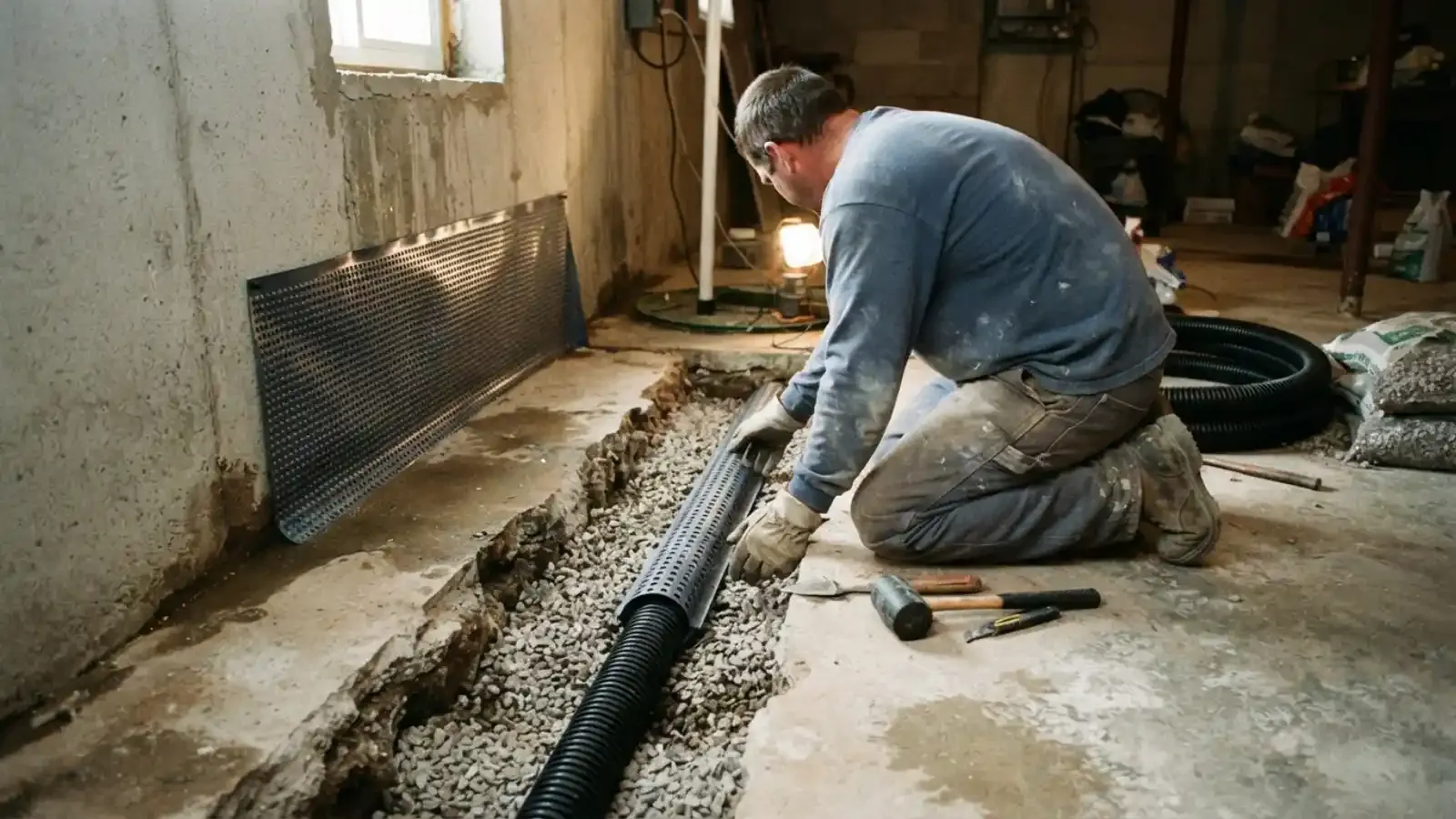
When outside fixes are not enough, interior drainage is the standard answer. A perimeter drain channel along the footing collects water that seeps in, and it carries it to a sump basin where a pump sends it outside. This manages the water, instead of trying to stop it at the wall.
Cement patches and coatings can be part of a larger plan. They are not substitutes for drainage when the wall is under pressure.
A sump pump becomes the heart of the system, so it must be sound. See our guide on basement waterproofing for how plumbers handle drainage and pumps together.
What Cape Cod geology means for your basement
The Cape Cod aquifer is a sole source aquifer, meaning it supplies all of the Cape's drinking water. The Cape Cod Commission notes that it is recharged only by precipitation, roughly 60 percent of the rain and snowmelt that falls, and that glacial deposits that hold the water are 200 to more than 600 feet thick.
For a homeowner, the practical point is simple. Groundwater sits relatively close to the surface in many places. In spring 2018, the Commission reported record March levels at observation wells, with the water table two to three feet higher than in January.
Sandwich is made of three villages, Sandwich, East Sandwich and Forestdale, and conditions differ from one lot to another. Before you cut into a foundation or add a drain, ask the Sandwich Building Department whether your project needs approval, and ask the Health Department whether a septic system sits nearby.
Sources: Cape Cod Commission and Town of Sandwich.
A sensible order of operations
Start with a plumbing check, then fix gutters and grading. Patch cracks that are stable and small. Add a dehumidifier if moisture is the issue. Move to interior drainage and a sump pump if the water keeps coming.
Skip any plan that sells a single product as the whole answer. Waterproofing works best as a combination of drainage, patching and good housekeeping.
If you live in Bourne or Barnstable, see our Bourne plumber page and Barnstable plumber page for coverage areas.
Frequently asked questions
It can seal a small, stable crack or hole. It will not stop general seepage or water under pressure. If water returns elsewhere after patching, the cause is drainage, not that single crack.
For a damp but not wet basement, yes, as part of a larger plan. For active leaks, it tends to peel. Fix the water source first and paint last.
Shut off all water and check the meter. A moving dial means a leak. Look at where the wet spot is. Under a pipe or a fixture points to plumbing, and along the base of a wall points to groundwater.
Outside repair addresses water before it enters, but it means excavation. Inside patches are easier and cheaper but fight pressure from the wrong side. For serious cases, drainage is a better answer.
Not entirely. A sump pump removes water that collects in a basin. A full approach also handles outside drainage and sealing. Many homes do well with a sump and good grading.
The town's Building Department asks that you contact it before beginning construction, renovation or installation work, and it does not list specific jobs. Call the Building Department to ask about your plan.
Still have a question about your situation? The line is open around the clock.
Call (508) 389-4045Reference: the Cape Cod Commission explains the sole source aquifer under the Cape, which is the water table any basement plan has to work around. Drain and sump plumbing follows 248 CMR 10.00.