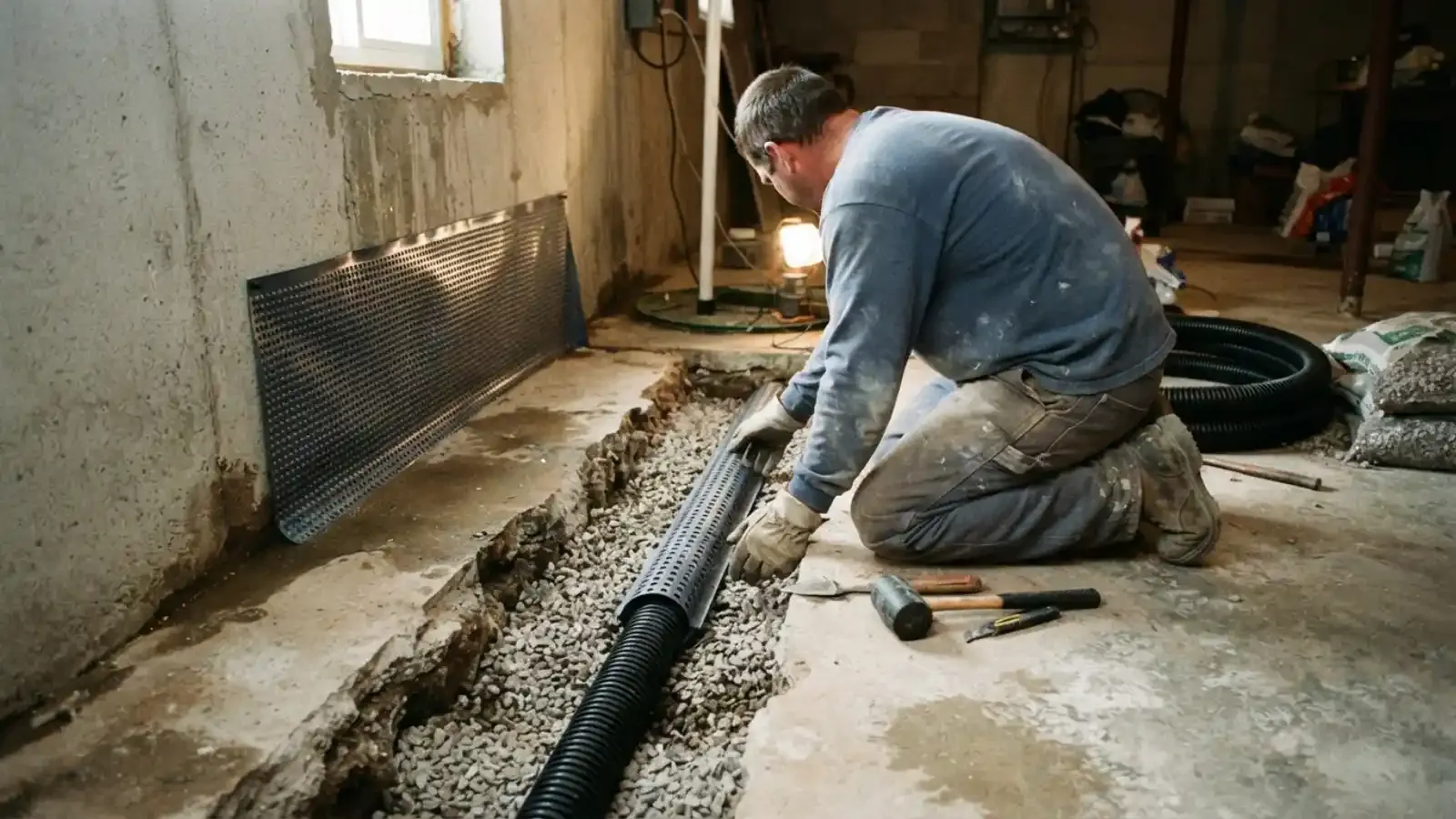
Why Basements Get Wet
Water finds a way in when the ground around a foundation is saturated, when gutters dump near the wall or when the groundwater level rises. Sandwich sits on Cape Cod, where the Cape Cod aquifer is the sole source of drinking water and the water table is a real factor for low basements and crawl spaces.
A basement can show water in several ways. Damp floors, white mineral deposits on walls, musty smells and puddles after heavy rain all point to moisture getting through. Each pattern suggests a different fix.
Start With The Cheap Fixes
Before any waterproofing system goes in, we look at the exterior causes, because they cost less to fix.
- Gutters and downspouts that empty within a few feet of the foundation.
- Soil that slopes toward the house instead of away.
- Window wells without a drain or with a cracked cover.
- Cracks in walls or the floor slab that can be sealed.
- Dryer vents or hoses that dump humid air inside.
Drainage Systems That Work
When exterior fixes are not enough, a drainage system moves the water out before it reaches the living space.
Sealing only
- Fills cracks and coats the wall
- Helps with small seepage
- Does not handle rising groundwater
- Can fail if water pressure builds behind it
Drainage and pump
- Channels water to a sump pit
- Handles heavier water flow
- Keeps the slab and walls drier
- Needs a working pump and power or backup
Signs It Is More Than Surface Moisture
Condensation and groundwater look similar at first. Taping a square of plastic to the wall for a day or two can show the difference. Moisture on the room side points to humid air. Moisture under the plastic points to water coming through the wall.
Standing water after several dry days is a stronger signal that groundwater is involved, and that is when a drainage system and pump start to make sense.
The Sump Pump And Its Backup
The pump is the heart of an interior drain system. It moves collected water to a safe discharge point away from the house. A pump that fails during a storm is the cause of many flooded basements, so a battery backup is worth considering where power outages are common.
If you already have a pump that struggles or will not run, see our sump pump repair page. We test the float, the check valve, the discharge line and the power supply before replacing anything.
Crawl Spaces And Slab Concerns
Crawl spaces trap moisture and can damage insulation and framing. We look for standing water, damp soil and failing vapor barriers, then recommend drainage, a vapor barrier or both.
If water appears on a slab floor with no clear source, a hidden pipe leak may be the cause instead of groundwater. Our leak detection service can tell the difference before you spend money on the wrong fix.
Code And Permit Notes
Discharge lines and pump connections are plumbing work. In Massachusetts, a licensed plumber should handle them and the work follows 248 CMR 10.00. Where a project touches the building's drainage or structure, the Sandwich Building Department can tell you what permit applies.
Do not connect a sump discharge to a septic system. It overloads the system and is a code problem. We route discharge to a safe outlet instead.
What Drives The Price Of Waterproofing
What shapes the price
We give you a clear price before work starts. Waterproofing varies a lot with the cause and the size of the area.
Source of the water
Exterior fixes cost less than interior drainage. We start with what the evidence shows.
Length of drain
A full perimeter drain costs more than a short section.
Pump and backup
A basic pump, a high-capacity pump and a battery backup are very different in cost.
Floor access
Concrete cutting and restoration add labor.
Discharge route
Longer or buried discharge lines add materials and time.
A note on insurance
Insurance often treats groundwater seepage differently from a sudden pipe burst. Ask your insurer what your policy covers before you decide on a project.
Frequently asked questions
Repeated puddles, damp walls, mineral deposits and musty smells after rain are common signs. We look at the cause before recommending a system.
A well-designed system manages water so it does not reach the living space. No system promises a perfectly dry space in every condition.
If groundwater regularly collects or rises near the slab, a pump is often part of the answer. We explain why before installing.
Yes. Downspouts that discharge near the foundation are a very common cause and easy to fix.
Yes. We look at drainage, vapor barriers and ventilation and recommend a plan for the conditions we find.
Both happen. A leak detection check can separate a pipe leak from groundwater so the repair fits the problem.
Still have a question about your situation? The line is open around the clock.
Call (508) 389-4045Standards note: interior drains and sump systems that connect to plumbing fall under 248 CMR 10.00. The Cape Cod Commission provides regional information on the Cape aquifer.