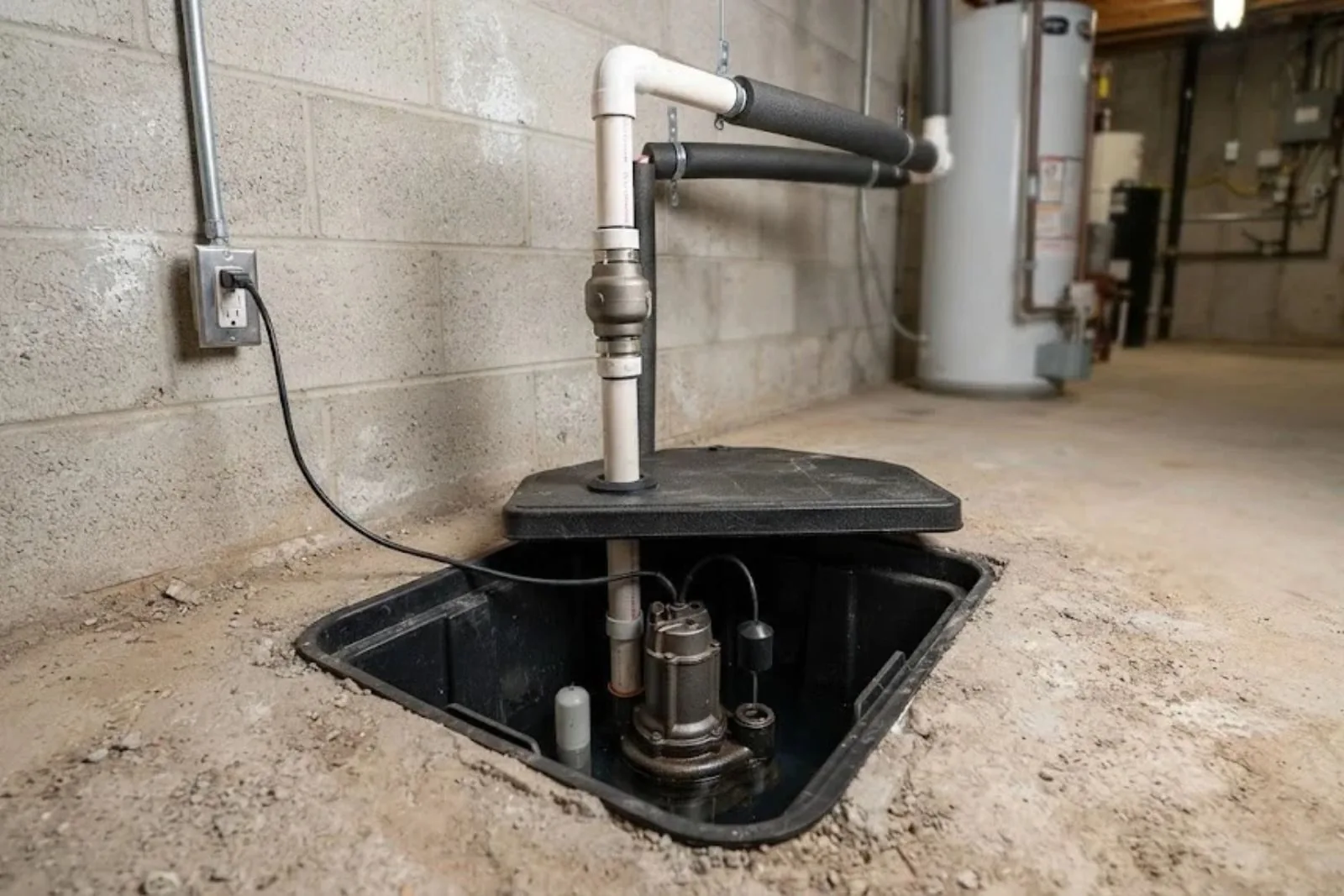
Sump Pump Emergency: What To Do While Water Rises
If water is rising in the pit and the pump is silent, check that it is plugged in and that the breaker has not tripped. Lift the float by hand. If the pump starts, the float is stuck or tangled. If it does not, call us right away.
Do not wade into water if outlets or appliances are submerged. Turn off power at the panel only if you can reach it dry. Move belongings off the floor and, if water is climbing, use buckets or a wet vac to buy time.
Power outage during a storm
A standard pump stops when the power goes out, which is exactly when groundwater and rain are highest. A battery backup keeps the pit from filling when the grid fails. We can add one during a replacement.
Why Sump Pumps Fail
Stuck float switch
Debris or the pit wall can hold the float down, so the pump never starts.
Clogged intake
Silt, gravel and small stones clog the screen and strain the motor.
Worn motor
Pumps wear out after years of cycling. A pump that hums but does not move water is likely done.
Failed check valve
Water flows back into the pit after each cycle, so the pump runs constantly.
Frozen or blocked discharge
Ice or a crushed outdoor line keeps water from leaving the house.
Repair Or Replace
A stuck float or a clogged intake is a quick fix. If the pump is old, rusty or has cycled itself hot, replacement is the safer choice. We size the new pump to the pit and the inflow, set it on a stable base and fit a new check valve and discharge line. If you want redundancy, a battery backup or a second pump adds protection.
| What you see | Likely cause | Typical response |
|---|---|---|
| Pump will not start | Float stuck, power or dead motor | Free the float, test power, replace if dead |
| Runs constantly | Failed check valve or stuck float | Replace check valve or adjust float |
| Cycles often | High groundwater or a small pit | Check inflow, consider a larger pump |
| Loud grinding | Worn bearings or debris | Clean intake or replace |
| Hums, no water | Clogged impeller or burnt motor | Clean or replace |
Sandwich Groundwater And Your Basement
Cape Cod sits on a sole source aquifer. The Cape Cod Commission notes that nearly all recharge comes from rain and snowmelt, and the aquifer supplies all of the Cape's drinking water. When wet seasons raise the water table, basements and crawl spaces feel it.
In spring 2018, Commission observation wells recorded record March levels, with Sandwich readings near the 80th percentile and the water table two to three feet higher than January. That is one season, not a forecast, but it shows why a working pump matters in a place where groundwater rises and falls.
Source: Cape Cod Commission, observation well news of April 2018 and its aquifer overview.
How A Sump Pump Visit Works
Check power and float
We test the circuit, the cord and the float switch.
Inspect the pit and discharge
We look for silt, a blocked line, a failed check valve or ice.
Repair or replace
We fix the issue or install a new pump with a fresh check valve.
Test under load
We fill the pit, confirm the pump starts, moves water and shuts off.
Keeping Your Pump Ready Before The Next Storm
Test the pump twice a year, and before heavy rain, by pouring a bucket of water into the pit. It should start, empty the pit and shut off. Clear debris from the pit. Check the discharge line outside and make sure it points away from the house. If your basement still floods with a working pump, you may need a different drainage solution. See basement waterproofing.
What Drives The Price Of Sump Pump Work
What drives the price
You get a clear price before work starts. Several choices shape the figure.
Pump type
Submersible and pedestal pumps differ in price and lifespan.
Horsepower and flow
Larger pumps move more water and cost more.
Battery backup
A backup system adds equipment but protects you in a power cut.
Pit and discharge
A cracked pit or damaged discharge line adds work.
After hours
Storm night calls are quoted the same way with the price stated first.
A note on insurance
Standard homeowner policies often exclude groundwater seepage unless you have added coverage. Ask your agent about sump pump overflow coverage.
Frequently asked questions
Check the plug and the breaker, then lift the float by hand. If nothing works, call us. Move belongings up and use a wet vac or buckets to hold the water back until we arrive.
A stuck float, a failed check valve or very high groundwater can keep it running. We find which it is and fix it.
If your basement floods when the pump stops, it is worth having. Power cuts often happen during the storms that stress pumps most.
Test it twice a year and before major storms by pouring water into the pit.
Often yes, if we can match the pit size and discharge. We tell you what is available when you call.
Away from the foundation and where water will not flow back toward the house. We check this when we visit.
Sometimes. A pump that runs constantly may indicate a drainage issue worth looking into. See our basement waterproofing page for options.
Still have a question about your situation? The line is open around the clock.
Call (508) 389-4045Reference: sump discharge and pump installation follow the state plumbing standard, 248 CMR 10.00, and the Cape Cod Commission provides regional information on the Cape aquifer.