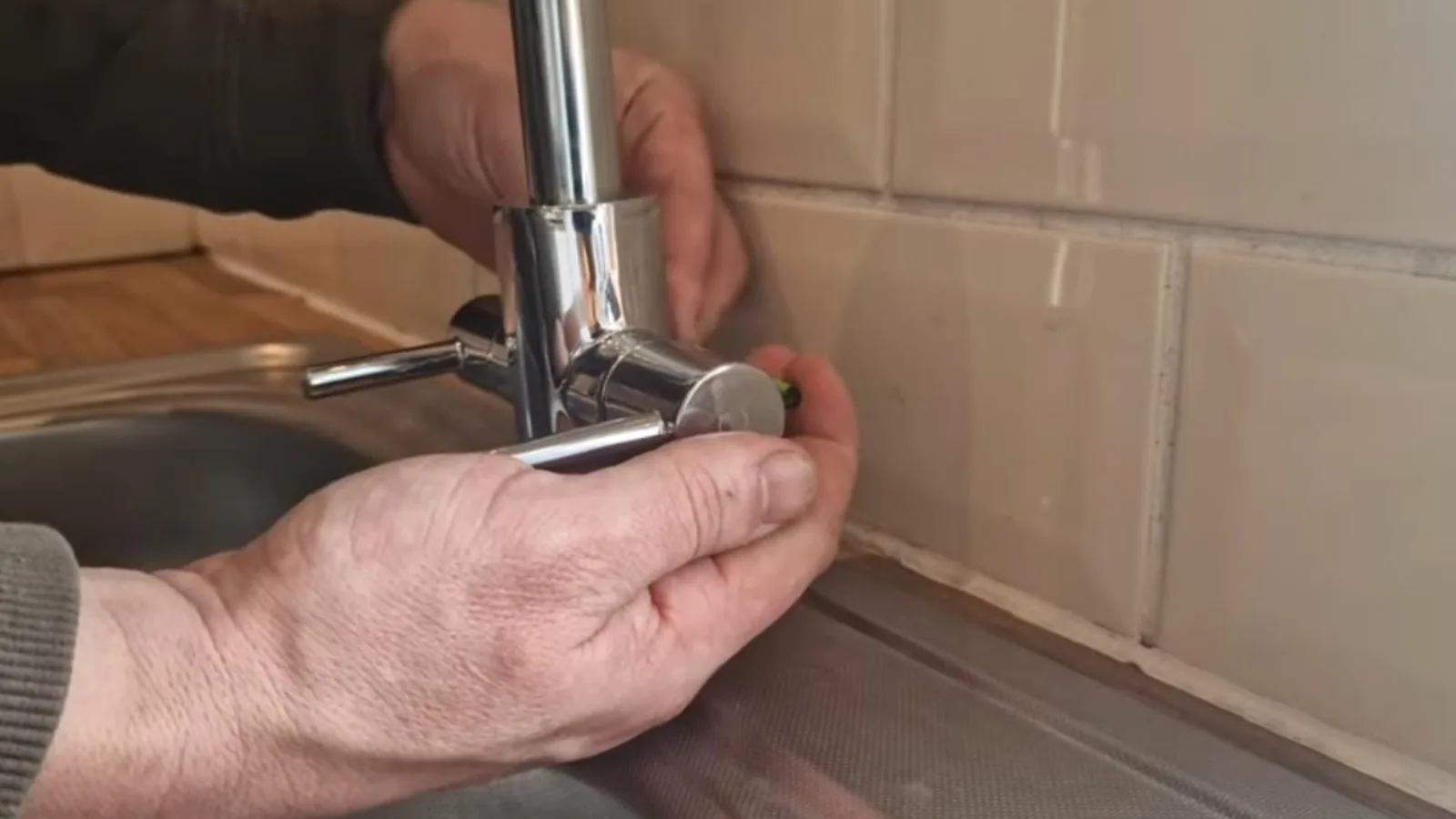
Why Grohe faucets are repairable
Grohe makes kitchen, bath and shower faucets with ceramic disc cartridges. A ceramic cartridge opens and closes the water by sliding two polished discs past each other. That design lasts a long time, but it is sensitive to grit and scale. A single grain of debris can stop the discs from sealing and leave a drip.
Most repairs are therefore a matter of cleaning or replacing the cartridge. The faucet body, spout and handle are designed to stay in place while the working part is swapped.
Identify your Grohe faucet first
The most common mistake is buying the wrong cartridge. Grohe uses different sizes for different series, and a part that looks right can fail to fit. Look for a model number on the underside of the faucet, on the box, or in your records, and match it to the replacement part.
If the faucet is older, a photo of the old cartridge held next to the new one helps. Check the diameter, the spline pattern on the stem and the height. A mismatch of a few millimeters is enough to cause a leak or a handle that never seats.
Common Grohe faucet problems and causes
Different symptoms point to different parts. Matching the problem to the cause saves a trip to the store.
| Problem | Likely cause | What usually fixes it |
|---|---|---|
| Dripping spout | Worn or dirty ceramic cartridge | Clean the discs or replace the cartridge |
| Low flow from the spout | Clogged aerator | Unscrew and clean or replace the aerator |
| Handle stiff or loose | Mineral buildup or loose set screw | Clean the stem and tighten the handle |
| Leak at the base | Worn O-rings on the spout swivel | Replace the O-rings and lubricate |
| Pull out spray dribbles | Hose kink or a failed diverter | Reroute the hose or replace the diverter |
Tools and parts to gather
A small set of tools covers most Grohe repairs. Gather them before you shut the water off so the faucet is not out of service longer than needed.
- A hex key for the handle set screw, often a small one
- A strap wrench or adjustable pliers with a rag to protect the finish
- Replacement cartridge or O-ring kit matched to your model
- Plumber's grease approved for potable water
- A towel in the sink to catch dropped parts
A typical Grohe cartridge repair, step by step
Shut off the water supply at the valves under the sink. If there are no working shutoffs, use the main and plan to replace the old valves while you are there. Open the faucet to drain the lines.
Take off the handle
Remove the cap, loosen the set screw, and lift the handle off the stem.
Remove the cartridge
Unscrew the retaining ring or nut and pull the cartridge straight up. Note which way the ports line up.
Clean the seat
Wipe the housing and check for scale, scoring or debris that would keep the new part from sealing.
Fit the new part
Lubricate the seals, seat the cartridge fully, reassemble, and restore water slowly while watching for leaks.
Do not force a stuck cartridge
Scale can weld a cartridge to its housing. Soak the area with white vinegar for a while and try again before reaching for tools that can scratch or crack the body.
Parts will not match or the body is damaged?
A plumber can identify discontinued models, source parts and replace the faucet if repair no longer makes sense.
Repair or replace?
A repair is cheaper when the faucet is sound and parts are available. Replacement makes more sense when the body is corroded, the finish is peeling, the faucet leaks at several points or parts are discontinued. A rule of thumb is to repair if the fix is a cartridge or aerator and to replace if the faucet needs more than one major part.
Repair makes sense when
- The leak comes from a cartridge, aerator or O-ring
- The body and finish are in good shape
- Parts are available for your model
Replacement makes sense when
- The body is cracked or heavily corroded
- The faucet leaks in more than one place
- You are remodeling and want a different fixture
Sandwich specifics: water that sat, and valves that stick
Many Sandwich homes are seasonal or lightly used in winter. The Sandwich Water District advises flushing a tap for thirty seconds to two minutes after water has been sitting for a long time. After a long absence, open each faucet and let it run, then watch the Grohe handle for stiffness or a drip as the cartridge starts moving again.
The district also adds sodium hydroxide at its wells and booster station to control corrosion of household plumbing, according to its 2025 water quality report. The report does not give hardness, so if you see white scale on your aerators, ask the district about your water and consider how often to clean them.
Because Sandwich is part of the Cape Cod sole source aquifer, the water in your faucet comes from groundwater wells rather than a surface reservoir. That is the context for your plumbing, and you can ask the district for details specific to your street.
Sources: Sandwich Water District 2025 Water Quality Report and FAQ, via the Town of Sandwich website, and Cape Cod Commission.
Aerators, hoses and other quick checks
Low flow is not always the cartridge. An aerator is the small screen at the spout tip, and it catches debris that comes through the line. Unscrew it, rinse it and look at the screen. If it is clogged, flow returns to normal at once.
On pull out and pull down models, check the hose for kinks beneath the sink. A hose that rubs against a trap or a stored bottle can restrict flow and make the spray dribble.
Keeping a Grohe faucet working longer
Clean the aerator every few months. Wipe the spout and handle with a soft cloth. Avoid harsh abrasive cleaners that can damage the finish. If the handle begins to feel gritty, treat it early, because debris scores the cartridge discs and shortens their life.
If you live in Barnstable or Bourne and your faucet is giving trouble, our faucet repair service can handle cartridges, aerators and full replacements. Plumbers can also help with a new fixture installation if you decide to upgrade.
Frequently asked questions
A worn or dirty ceramic cartridge is the most common reason. Cleaning or replacing it usually stops the drip.
Look for the model number on the faucet or box. If you cannot find it, match the old cartridge by size, spline pattern and height.
No. Shut off the supply valves first, and use the house main if the under sink valves do not work.
Often yes, if the body is sound and parts are available. Replace it if the body is corroded or parts are discontinued.
It is usually mineral buildup on the stem or a dry seal. Clean and lubricate, or replace the cartridge.
The Sandwich Water District advises flushing for thirty seconds to two minutes after water has sat for a long time. Do it for every faucet, then check for drips.
Still have a question about your situation? The line is open around the clock.
Call (508) 389-4045Reference: follow the manufacturer's guidelines for cartridge replacement. Plumbing work in Massachusetts is regulated under 248 CMR 10.00.