The short answer
A drain snake, also called a cable or auger, punches a hole through a clog. Hydro jetting blasts water at very high pressure to scour the walls of the pipe clean. If one stubborn plug is the problem, a snake is usually the right and cheaper first move. If the same line keeps backing up, jetting is often the better fix.
The wrong choice is expensive in either direction. Snaking a pipe lined with grease only drills a small tunnel that fills back in. Jetting an old, cracked line can push water out through the weak spots. A good plumber looks at the pipe first and picks the tool second.
How snaking actually works
A snake is a coiled steel cable with a head on the end, driven by a motor or hand crank. The plumber feeds it into the drain until it meets resistance, then spins the head so it bores into the clog or hooks onto it. The cable is pulled back out, often with debris attached.
Different heads do different jobs. A bulb head is gentle and suits small household lines. A cutting head chews through roots and thick buildup. Larger machines reach farther down a main line, which is why a bathroom sink uses a hand tool and a basement main uses a drum machine.
- Best for single blockages such as hair, a toy, or a wad of paper
- Fast, usually done in under an hour
- Lower cost than jetting for one-time clogs
- Leaves a narrow path in a greasy pipe, so the clog can return
How hydro jetting actually works
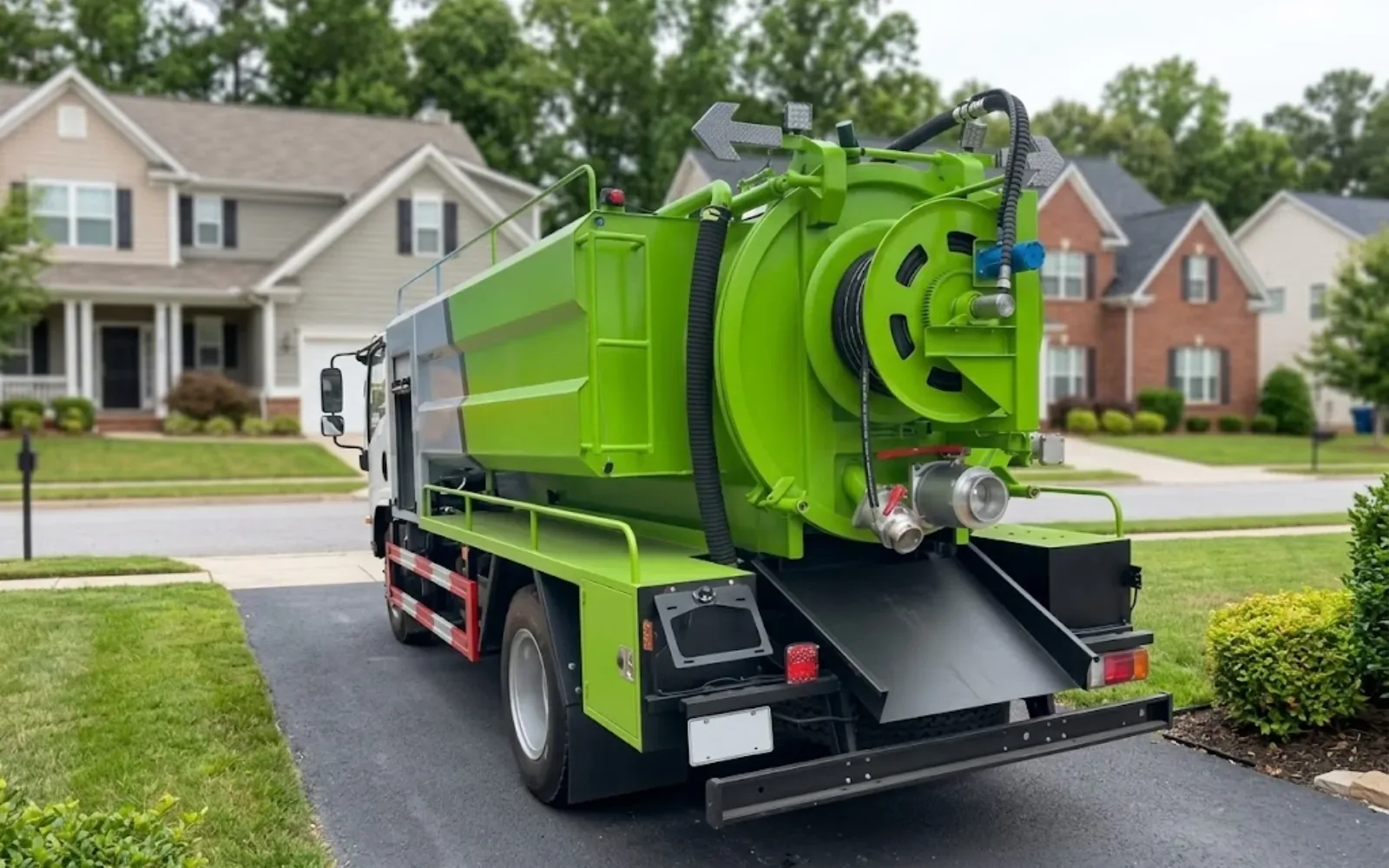
A jetting machine feeds a flexible hose with a specialized nozzle into the line. Water exits the nozzle at very high pressure, with jets facing backward to pull the hose forward and jets facing sideways to scrape the pipe wall. The effect is closer to pressure washing the inside of the pipe than to poking a hole in it.
Because it removes the coating on the wall, jetting handles grease, soap scum, mineral scale and fine roots that a cable leaves behind. It also flushes everything it loosens down the line instead of dragging it back to you. That is why it is the usual answer to a drain that clears for a month and then slows again.
Snaking vs jetting side by side
| Question | Snaking | Hydro jetting |
|---|---|---|
| Best use | One clear blockage | Buildup on the whole pipe wall |
| Grease | Pokes a hole, grease stays | Strips it from the pipe |
| Roots | Cuts the roots it reaches | Clears fine roots, camera first for big ones |
| Risk to old pipe | Low with the right head | Higher on cracked or brittle lines |
| Cost | Lower | Higher, but can prevent repeat visits |
| Repeat clogs | Often return | Usually last longer |
Signs you should skip the snake
Some symptoms point away from a single clog. If several fixtures gurgle or drain slowly at once, the problem is probably in the main line. If a snake cleared the drain and it slowed again within weeks, the buildup is on the pipe wall and not in one spot.
- Slow drains in more than one fixture
- A kitchen line that has needed clearing more than once a year
- Slime or a sour smell coming back soon after a cleaning
- Roots found on a previous camera inspection
A camera inspection settles the question. It shows whether you have grease, roots, a belly in the pipe or a break, and each of those needs a different answer. A sewer camera inspection costs far less than guessing twice.
When jetting is the wrong call
Jetting is not for every pipe. Old clay, cast iron with flaking walls, and lines with open joints or breaks can be damaged by high pressure. A camera pass first tells the plumber whether the pipe can take it, and sometimes the honest answer is a repair before any cleaning.
Lines that serve a septic tank need extra thought too, because flushing a large load of debris toward a tank or field is a problem of its own. If you are not sure what your home connects to, that question comes before the tool choice.
Sandwich details: sewer or septic comes first
Before choosing a method, find out what your drain line ends at. The Town of Sandwich Health Department has a Water and Wastewater section, and its pages do not state whether a given street is on sewer. The practical step is to ask the Health Department whether your street has sewer or a Title 5 septic system.
Title 5 is the state septic code, found at 310 CMR 15.000, and it requires inspection under certain circumstances. If you are on a septic system, tell your plumber before any jetting so the debris is handled with the tank and leaching field in mind. Homes on the Cape also sit over the sole source aquifer, which supplies all of the Cape's drinking water, so what goes into the ground matters.
If you are in the next town over, the same question applies. Our pages for plumbing in Bourne and plumbing in Barnstable cover how the neighboring areas are served.
Source: Town of Sandwich Health Department and Cape Cod Commission
Not sure which method fits?
Tell the plumber what the drain is doing and ask for a camera check before any machine goes in.
What to expect on the day
A visit usually starts with questions about which fixtures are slow and how long it has been going on. The plumber finds a cleanout or pulls a fixture to reach the line, then runs the cable or camera. If jetting is chosen, the work takes a little longer because the hose has to be run the full length of the problem section.
Ask for the price before work starts and ask what happens if the first method does not clear it. A plain answer to that question tells you a lot about how the company works. See our drain cleaning page for what the process looks like from our side.
Keeping the line clear afterward
Jetting resets the pipe, but habits decide how long the reset lasts. Pour cooled cooking grease into a can, not the sink. Use drain screens in showers and tubs. Keep wipes, even ones labeled flushable, out of the toilet.
If a line has been jetted, watch it for the first few weeks. A fast return of the problem points to a structural issue such as a sag or a break, which cleaning alone cannot fix.
Frequently asked questions
It is safe for sound pipe and risky for damaged pipe. A camera inspection first shows whether the line can take the pressure.
Most homes never need it on a schedule. Lines with a history of grease or root problems are sometimes jetted every year or two, based on what the camera shows.
A small hand auger can clear a sink or tub clog. Main lines and anything past a cleanout need a machine and some experience, and a cable can scratch or snag in the wrong hands.
It clears fine roots well. Thick roots that have split a pipe need a cutting head or a repair, and the camera tells you which one applies.
The line leading to a tank can be cleaned, but the plumber should know about the tank first so loosened debris is managed. Tell them before the work starts.
The town pages do not state it, so ask the Sandwich Health Department. They can tell you whether your address is on sewer or a Title 5 septic system.
Still have a question about your situation? The line is open around the clock.
Call (508) 389-4045Standards note: drain maintenance is not permitted work, but pipe repair after a camera inspection follows 248 CMR 10.00. Septic homes also fall under Title 5 guidelines (310 CMR 15.000).