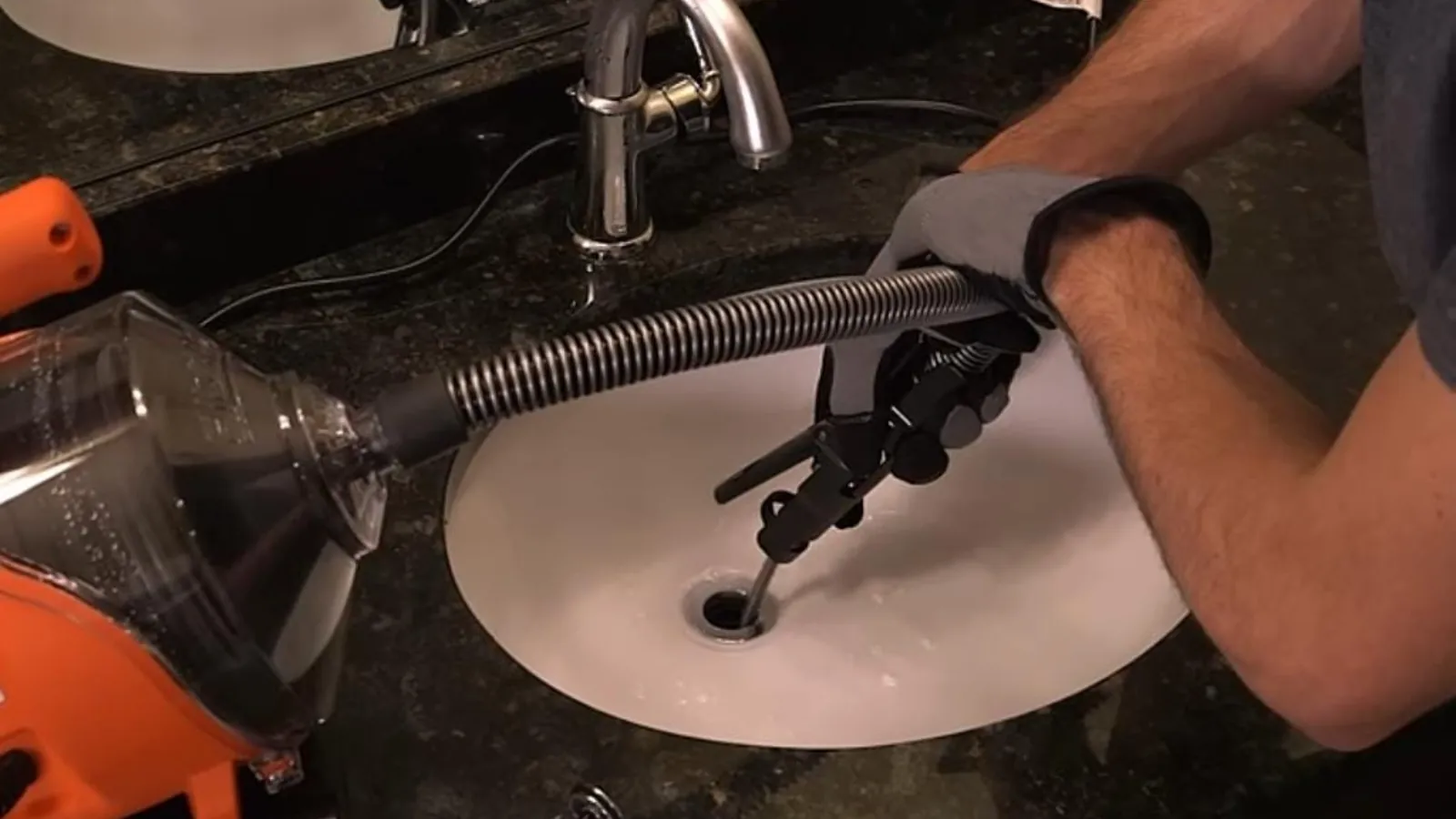
Why kitchen sinks clog
Kitchen drains handle the worst of what a home sends down: fats, oils, coffee grounds, starchy food and soap. Grease cools inside the pipe and coats the wall. Each wash adds a thin layer of food that sticks to it, until the opening is a fraction of its original size.
A slow sink is usually a buildup problem, and a sink that will not drain at all is a plug on top of that buildup. The first step is to learn where the blockage sits.
Start with the easy stuff
Remove standing water with a cup if you need to work in the basin. Clear the strainer and drain opening of visible debris. If you have a garbage disposal, check for a jam by turning it off and using the hex wrench slot underneath to free the blades.
Then try a cup plunger. Cover the overflow opening with a wet rag so the pressure goes down the drain, and use steady strokes. In a double sink, plug the other basin first. Many sink clogs clear in a few minutes.
Clear the basin
Remove food and debris around the drain.
Check the disposal
Make sure it is off and not jammed.
Plunge
Block the overflow and plunge the other drain closed.
Test with hot water
Run hot tap water and watch how fast it drains.
What to do before you try anything
A few precautions prevent a small clog from becoming a bigger problem.
- Do not mix chemical drain cleaners. The fumes can be dangerous.
- Wear gloves and eye protection if you work under the sink.
- Do not run the disposal if the sink is full of standing water.
- Bail out standing water before opening any trap.
- If the other drains are gurgling too, stop and call a plumber.
Clean the trap
If plunging fails, the clog is often in the P-trap, the curved pipe under the sink. Put a bucket underneath, unscrew the slip nuts by hand or with pliers, and take the trap apart. Empty it, rinse it and check the pipe stub in the wall.
Reassemble with the washers seated correctly and run water to check for leaks. A trap full of gray sludge is a clear sign your pipe is coated with grease farther down the line.
What does not work
Chemical openers can eat at old metal pipe, burn skin and fail anyway. They also leave a pool of harsh liquid in the sink for whoever works on it next.
Skip these
- Pouring bleach or drain opener
- Running hot water with a plunger inside a clog
- Forcing a metal hanger into the disposal
- Using the disposal on bones and fibrous peels
Try these
- A cup plunger with the overflow blocked
- Cleaning the P-trap
- A small hand auger past the trap
- A plumber for repeat clogs
When the problem is the main line
If water from the kitchen sink backs up into another fixture, or the basement floor drain gurgles when you run the dishwasher, the issue is further down than the sink. That is a main line or branch line problem, and a trap cleaning will not reach it.
- Dishwasher water appearing in the sink
- Gurgling from other drains
- Slow drains throughout the house
- Sewage smell near the drains
These signs call for a machine and a camera. A plumber from our team can handle it through drain cleaning, and the camera shows why the line clogged so you can fix the cause.
Sandwich details: sewer, septic and grease
Grease and what you pour down the sink matter more if your home uses septic. The Sandwich Health Department has a Water and Wastewater section but does not say which streets are on sewer, so ask the department whether your street has sewer or a Title 5 septic system.
Title 5, at 310 CMR 15.000, is the state septic code, and it requires inspection under certain circumstances. Fats and food solids reaching a tank can shorten its time between pumpings and burden the leaching field. The Cape Cod Commission notes that the Cape aquifer is a sole source of drinking water, which is one more reason to keep grease and chemicals out of the drain.
Homes in nearby towns face the same choice. See our pages for Bourne and Mashpee.
Source: Town of Sandwich Health Department and Cape Cod Commission
Drain still not clearing?
If the sink is full and nothing is working, call and tell the plumber what you have already tried.
Double sinks, dishwashers and air gaps
Many kitchen sinks share one drain with a second basin, a disposal and a dishwasher. That layout is why a clog can show up in surprising ways. Water that rises in the second basin when you run the first means the blockage sits past the joint where the two meet.
The dishwasher drain hose connects either to the disposal or to the sink tailpiece, often through a loop or an air gap. A kinked or clogged hose sends gray water back into the basin. If water from the dishwasher is the only thing backing up, check the hose and the disposal inlet before blaming the main line.
A newly installed disposal sometimes has a knockout plug left in the dishwasher inlet, which blocks the drain from day one. A plumber can find and remove it in a minute.
Keep the kitchen drain clear
Scrape plates into the trash before washing. Pour cooled grease into a jar or can, and put it out with the garbage. Use a sink strainer to catch food. Run hot water for a few seconds after dishes so the soapy water carries further down the pipe.
If you use a disposal, run it with cold water and avoid feeding it large amounts of potato peels, rice, pasta or coffee grounds. These swell or pack together in the line.
A yearly cleaning of a drain that has had trouble before is cheaper than an emergency call. If the line keeps filling, ask about hydro jetting, which scours the pipe wall instead of poking a hole through it.
One more habit helps more than any product. Once a week, run very hot tap water down the drain for a minute after the dishes are done. It will not dissolve a plug, but it keeps fresh grease moving and gives you an early warning, because a drain that suddenly takes longer to clear is telling you to act before the sink fills.
Frequently asked questions
Usually grease and food buildup inside the pipe. A plunger or trap cleaning often helps, but a coated line needs a deeper cleaning.
It can freshen a drain and loosen light buildup, but it will not clear a solid clog.
The dishwasher shares the drain line, so a clog past the sink pushes water back into the basin.
Yes. Fibrous food, grease and a jammed blade assembly all slow the drain.
When plunging and trap cleaning fail, when other fixtures are affected, or when the sink clogs again within weeks.
The town pages do not say. Ask the Sandwich Health Department whether your street has sewer or a Title 5 septic system.
Still have a question about your situation? The line is open around the clock.
Call (508) 389-4045Reference: according to the plumbing code, 248 CMR 10.00, traps and vents must meet state standards. Sandwich homes on septic also fall under Title 5 guidelines (310 CMR 15.000).