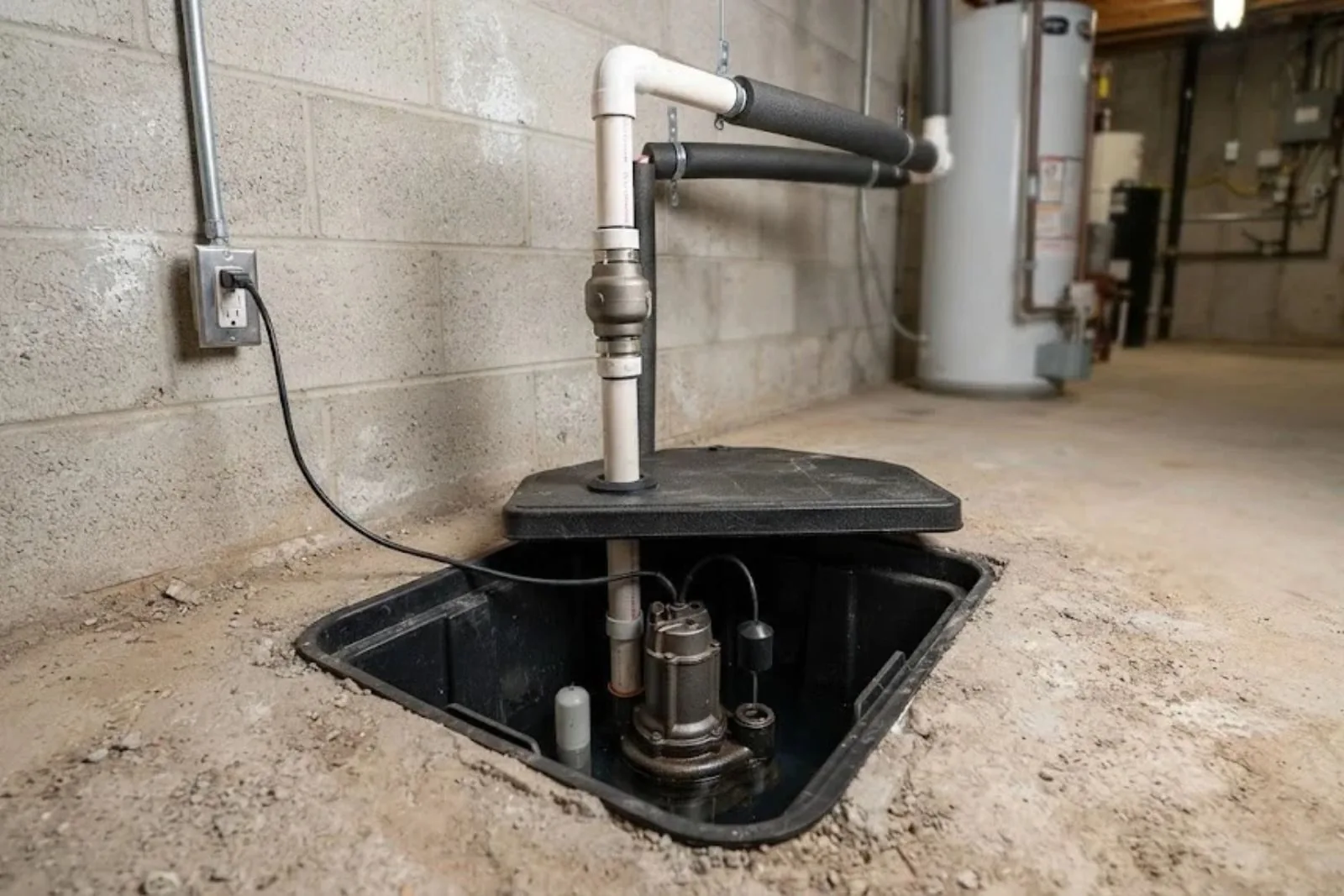
What a sump pump does
A sump pump sits in a pit, called a basin, dug into the lowest part of a basement or crawl space. Groundwater or drain tile water runs into the basin. When the water rises to a set level, a float switch turns the pump on, and the pump pushes the water out through a discharge pipe to somewhere safe outside.
Most pumps are either submersible, sitting in the water, or pedestal types with the motor on a stalk above the pit. Submersible models are quieter and handle more. Pedestal models are often easier to service and can last a long time when the pit is kept clean.
Either way, the pump works only when four things are in order. The basin must be clear, the switch must move freely, the pump must have power and the discharge line must run clear.
Warning signs your pump is failing
Pumps rarely fail without hinting at it. Learn the sounds and habits of your own pump so you notice changes. A pump that has served a decade is working on borrowed time even if it looks fine.
Test it twice a year and before forecast storms. Pour a bucket of water into the basin and watch whether the pump starts, empties the pit and shuts off.
- The pump runs constantly, or turns on and off every few seconds.
- It makes grinding, rattling or humming sounds without moving water.
- It does not start when the pit is full.
- The pump is more than seven to ten years old.
- Rust, mud or debris are visible in the basin.
- The discharge pipe vibrates or the pump shakes when it runs.
The usual causes of failure
The float switch is the most common failure. It can stick against the side of the basin, get snagged on the power cord or wear out inside. A stuck float on keeps the pump running dry and burns it out. A stuck float off lets the basin overflow.
A clogged intake screen or impeller is next. Sand, silt and small stones get pulled in, and the pump strains. A failed check valve is another, since it lets water in the discharge pipe fall back into the pit and makes the pump cycle over and over.
Power failure, frozen discharge lines and plain old age round out the list. Many of these can be fixed. Some are signs the pump has reached the end of its life.
Repair or replace
Fixing a pump makes sense when the problem is a cheap part, such as a float switch or a check valve, and the pump is still fairly young. Replacing makes sense when the motor is worn, the housing is cracked or corroded, or the pump is old and the basement matters to you.
A new pump is often not much more than a series of repairs on an aging one. If a pump has to be pulled twice in two years, the replacement is usually the better value.
Repair when
- The pump is under about five years old
- A float, check valve or screen is the clear fault
- The motor runs smoothly when powered by hand
- The pit and discharge are in good shape
Replace when
- The pump is near ten years old
- The motor hums but does not turn
- The housing is cracked or heavily corroded
- It keeps cycling after repairs
Sizing and picking a new pump
Bigger is not always better. An oversize pump short-cycles, which wears out the motor and the switch. A pump that is too small cannot keep up in a storm. A plumber sizes the pump to the basin, the vertical lift to the discharge point and the amount of water you see in wet weather.
Most homes do well with a one-third or one-half horsepower submersible pump. A cast iron body dissipates heat better than plastic, and a vertical float switch fits a narrow basin better than a tethered one.
A properly installed check valve, a discharge line that slopes away from the house and a sealed basin lid will all extend the life of the new pump and cut humidity in the basement.
Basement water rising now?
Call right away. A plumber can often arrive the same day, and you can ask what to do with the pit while you wait.
Battery backup and water-powered backup
Storms that fill basements often knock out power. A pump on household current is no help when the lights are off. A battery backup pump has its own marine-type battery and a separate switch, and kicks in when the main pump fails or loses power.
A good battery backup system runs for hours, not days, so it buys time. Test the battery each year and replace it every few years. Some owners add an alarm that sounds when the water rises too high.
A generator with a transfer switch is another route, especially for homes with other critical loads. A plumber and an electrician can work together to make sure the pump circuit is safe.
Groundwater on Cape Cod
On Cape Cod, the water table is close to the surface in many places. The Cape Cod Commission explains that the aquifer is recharged only by precipitation, and the glacial deposits that hold it run from 200 to more than 600 feet thick. When rain and snowmelt arrive in volume, groundwater can rise toward basement floors.
In spring 2018, the Commission reported that observation wells were at record March levels, with Bourne readings in the 90th percentile and Sandwich in the 80th, and the water table two to three feet higher than January readings. That is a reminder that a basement that stays dry for years can still take on water in a wet season.
If your Sandwich home has a sump, treat it as part of a larger system. Keep gutters and downspouts discharging well away from the foundation, and ask the Sandwich Building Department before starting any new drainage work.
Sources: Cape Cod Commission and Town of Sandwich.
Maintenance that keeps it running
Every few months, pull the lid and look in the basin. Remove silt and stones, and check that the float moves freely. Clean the intake screen on pumps that have one.
Check the discharge pipe outside. Make sure the end is clear, that it does not point back at the foundation and that no ice or debris blocks it. In cold weather, a frozen discharge can make the pump run itself to death.
Keep a written record of the install date and any repairs. If you live in Bourne or Barnstable, see our Bourne plumber page and Barnstable plumber page for coverage. For hands-on help, our sump pump service covers repair, swaps and backup systems.
Frequently asked questions
Most last around seven to ten years, depending on how often they run and how clean the basin stays. A pump that runs constantly during wet seasons may wear out sooner.
High groundwater, a stuck float, a failed check valve or a leak in a nearby pipe can all cause it. Watch the basin for a day. If water keeps arriving, a plumber can look for a leak or drainage issue.
Some owners do, but discharge routing, wiring and check valve placement are easy to get wrong. A poor install can fail in the first storm. A plumber can also check whether a permit is needed.
If your basement has finished space, stored valuables or a history of water, a backup is a wise addition. Storm outages are common, and a backup is cheap compared to flood damage.
Away from the foundation, preferably well downslope and not onto a neighbor's property or into a septic system. Check town rules, and ask the Sandwich Building Department if you are unsure.
It can. The Cape Cod Commission reported record March well levels in 2018, with Sandwich readings in the 80th percentile. Low-lying and older foundations are the most exposed.
Still have a question about your situation? The line is open around the clock.
Call (508) 389-4045Reference: the Cape Cod Commission provides regional information on the Cape aquifer, and sump discharge is regulated under 248 CMR 10.00.