How a gas tankless heater works
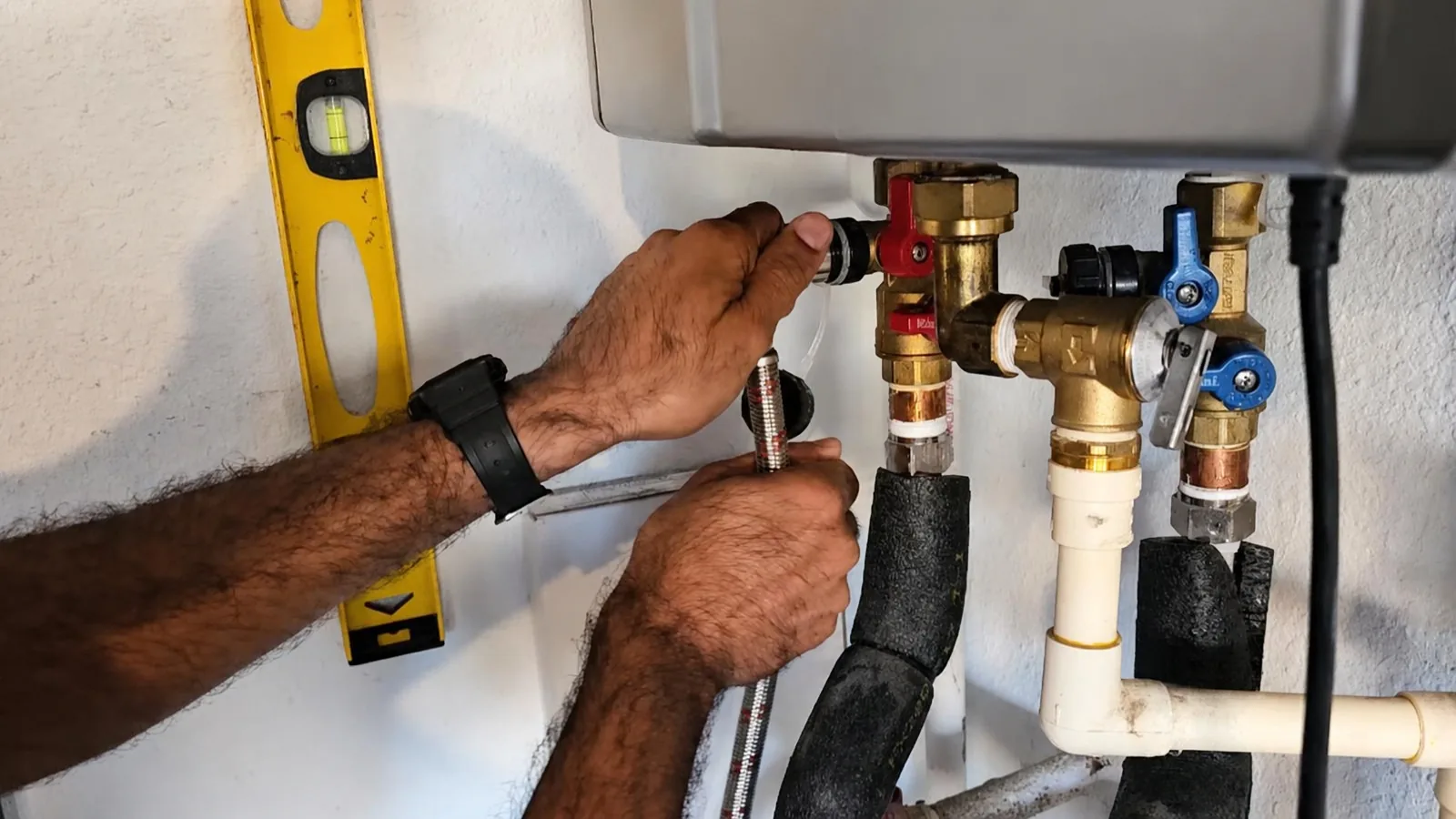
A conventional tank heater keeps thirty to fifty gallons of water hot around the clock. A tankless gas unit skips the tank. When you open a hot tap, a flow sensor fires a gas burner, and the water passes through a heat exchanger and leaves hot a few seconds later.
That one difference drives every pro and con on this page. There is no stored supply to run out, so hot water can last as long as the gas and the flow rate allow. There is also no tank to waste heat all day, but there is a much bigger burner and a much more demanding gas and venting setup.
Most trouble with tankless units does not come from the unit itself. It comes from a house that was never set up for one. A good decision starts with the house, then moves to the heater.
The real advantages
Homeowners usually switch for four reasons. The first is endless hot water at a steady temperature, which matters in a household where two showers and a dishwasher run on the same morning. The second is the smaller footprint, since a wall-mounted unit frees up floor space in a basement or utility closet.
The third is lower standby loss. A tank heater keeps reheating water that nobody is using. The fourth is a longer expected service life when the unit is flushed on schedule, and many models let you replace parts rather than the whole appliance.
- Hot water does not run out during back-to-back use.
- The wall unit saves floor space.
- No tank sits full of water to leak and flood a basement.
- No standby heating cycle between uses.
- Parts can often be replaced one at a time.
The real disadvantages
The biggest drawback is cost. The unit costs more than a tank heater, and the installation often costs much more because the gas line, venting and sometimes the electrical supply need upgrading. Plan for the whole project, not just the sticker price of the appliance.
The second drawback is the cold-water sandwich. If someone runs a tap, shuts it off and runs it again a few seconds later, a slug of cold water can reach the fixture before the burner catches up. Small, short draws such as rinsing a glass can also fail to trigger the burner at all.
The third is maintenance. A tankless heat exchanger needs a periodic flush with a descaling solution. Skip that, and scale builds up, flow drops and error codes start to appear.
Where tankless shines
- Larger families with overlapping hot water use
- Homes with a strong gas supply and easy exterior venting
- Owners who plan to stay for many years
- Basements where floor space matters
Where a tank still wins
- Small households with light, predictable use
- Homes with an undersized gas line
- Tight budgets where installation cost decides
- Houses with no practical vent route
Gas supply is the first gate
A gas tankless heater burns a large amount of fuel for a short time. Many units are rated well above what a tank heater needs, so the gas meter, the pipe size and the length of the run all matter. A line that served an old tank and a stove may be too small for a tankless burner.
A plumber sizes the gas piping from the meter to the appliance using the unit's input rating and the code tables. If the pipe is too small, the unit will starve at high flow and shut down or lock out.
Not every Sandwich street has natural gas. On Cape Cod the gas utility is National Grid, and plenty of homes run on propane or oil instead. Before you shop, find out what fuel your house has and whether a gas main runs past it.
Venting and combustion air
Modern high-efficiency tankless units usually vent through plastic pipe, often out a side wall. That sounds simple, but the vent has length limits, slope requirements and clearance rules from windows, doors and meters. A basement location far from an exterior wall can turn a simple swap into a major job.
Old tank heaters often vent into a masonry chimney. When the old heater leaves, the chimney may still serve a furnace or boiler, and the combined flue can become too large for the remaining appliance. That is a safety question, not a cosmetic one, and it needs checking before the old unit comes out.
Carbon monoxide detectors belong near every sleeping area and near any gas appliance. Test them when the new unit goes in.
Flow rate and Cape Cod winters
Tankless heaters are rated by how many gallons per minute they can raise by a set temperature. The colder the incoming water, the lower that flow. Groundwater in the Northeast runs much colder in January than in August, so a unit that feels generous in summer can feel stretched in winter.
Ask for sizing based on your coldest months, not on a brochure number. Count the fixtures that might run together, then compare that demand to the winter rating of the unit you are considering.
A short list helps. Write down the number of showers, the dishwasher, the washing machine and any soaking tub. A plumber can turn that list into a sound size choice.
Want a straight answer for your house?
Call and describe your fuel, your basement layout and your hot water habits. A plumber can tell you whether tankless fits.
Maintenance you cannot skip
Every tankless unit collects mineral scale inside the heat exchanger. How fast depends on the water, the temperature setting and how often the unit runs. The fix is a flush with a descaling solution, circulated through the unit with a small pump, and many manufacturers want it done once a year.
Most gas tankless installs should include service valves on the hot and cold lines so flushing is easy. If your quote leaves them out, ask why. Without them, every future flush costs more labor.
Also clean the inlet screen, check the vent for blockage and keep the area around the unit clear. A heater that gets annual attention can last a long time. One that never gets touched often fails early and costs more in the end.
What Sandwich says about gas and plumbing work
In Sandwich, the Building Department handles plumbing and gas permits and inspections, and permits are requested through its online portal. Plumbing and gas inspections are scheduled on Mondays, Wednesdays and Fridays, and bookings are made by phone, the day before or the same day until 9:00 am.
The town page does not list which specific jobs need a permit, so the safe move is to ask the Sandwich Building Department before you start. Under Massachusetts rules, permits for plumbing work are issued only to licensed plumbers, and the work must follow the Uniform State Plumbing Code, 248 CMR 10.00.
You can check any plumber's license through the state's eLIPSE portal. Water in Sandwich comes from groundwater wells, and the Sandwich Water District adds sodium hydroxide for corrosion control. If you are curious how your water behaves in a heater, read the district's annual water quality report or ask the district directly.
Sources: Town of Sandwich Building Department and Massachusetts Board of State Examiners of Plumbers and Gas Fitters.
A simple way to decide
Start with fuel. If you have no gas on your street, tankless gas is off the table and an electric or heat pump option may fit better. If you do have gas, ask whether the meter and pipe can feed a bigger burner.
Next, look at venting. Can the unit reach an exterior wall within the allowed run? If yes, tankless is likely workable. If no, a high-efficiency tank heater may be the sensible choice.
Last, think about your household. A busy family that will stay put for ten years often gains the most. A single occupant in a rental may never earn back the extra cost. If you want help working through it, the team behind tankless water heater service in Sandwich can walk through your layout, and our Bourne plumber page and Barnstable plumber page cover nearby towns we serve.
Frequently asked questions
Many tankless units have a longer expected service life, but only with regular flushing and clean venting. A neglected tankless unit can fail as early as a tank. The advantage comes from the replaceable parts and the lack of a tank that corrodes from the inside.
Sometimes, but often not. The burner on a tankless unit uses far more gas per hour than a tank heater. A plumber has to compare the unit's input rating to the size and length of your gas piping and to what your meter can supply.
That is the cold-water sandwich. Water left in the pipes cools, and the heater needs a few seconds to restart. Short pauses between uses are the usual cause. A recirculation setup or a small buffer can reduce it in some homes.
Many manufacturers call for a flush about once a year. Homes with scale-prone water may need it more often. Your installer can set a schedule based on the model and on how the unit performs.
Often not on cost alone. If you use little hot water, the savings are small and the extra installation cost can take a very long time to recover. Comfort and space savings may still tip the decision for some people.
Call the Sandwich Building Department. Plumbing and gas inspections run on set days, and the department can tell you what your particular job needs. Only a licensed plumber can pull the plumbing permit.
Still have a question about your situation? The line is open around the clock.
Call (508) 389-4045Reference: gas-fired tankless installations follow manufacturer guidelines and 248 CMR 10.00. The gas utility in Sandwich is National Grid, which can answer service-capacity questions.